
PE/EVOH/PE High-Barrier Film for Inline Thermal Lamination to PET Sheet
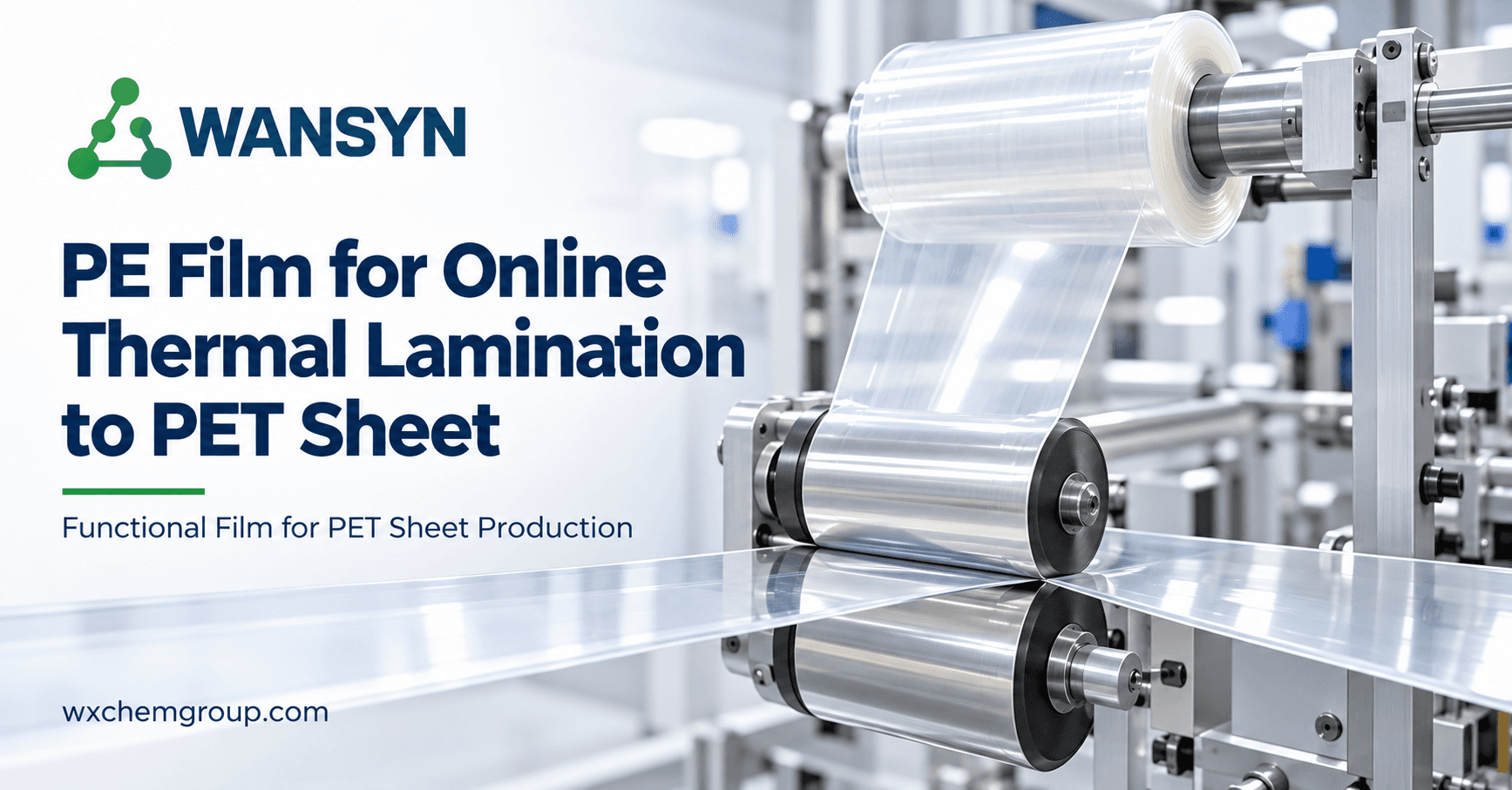
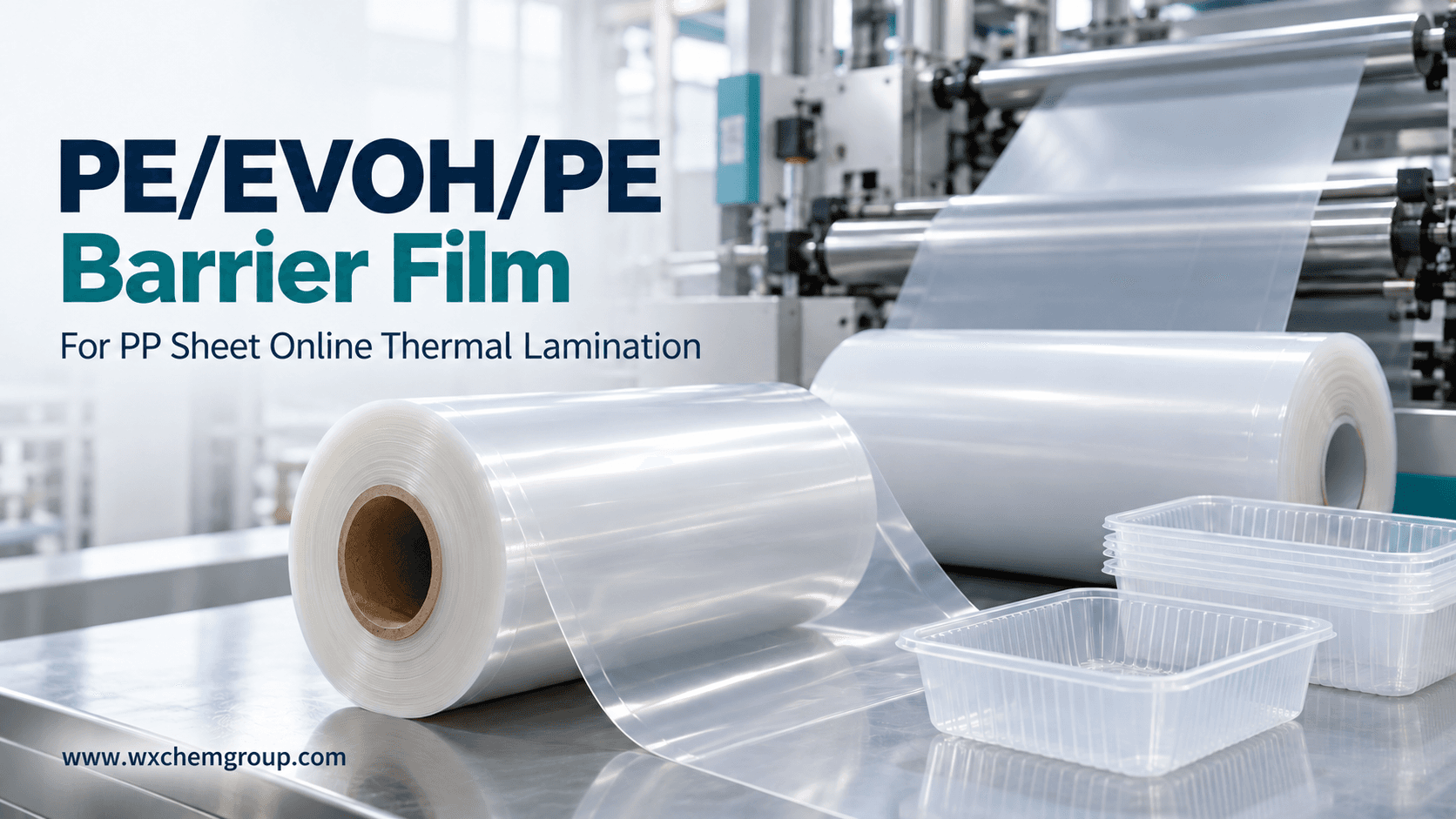
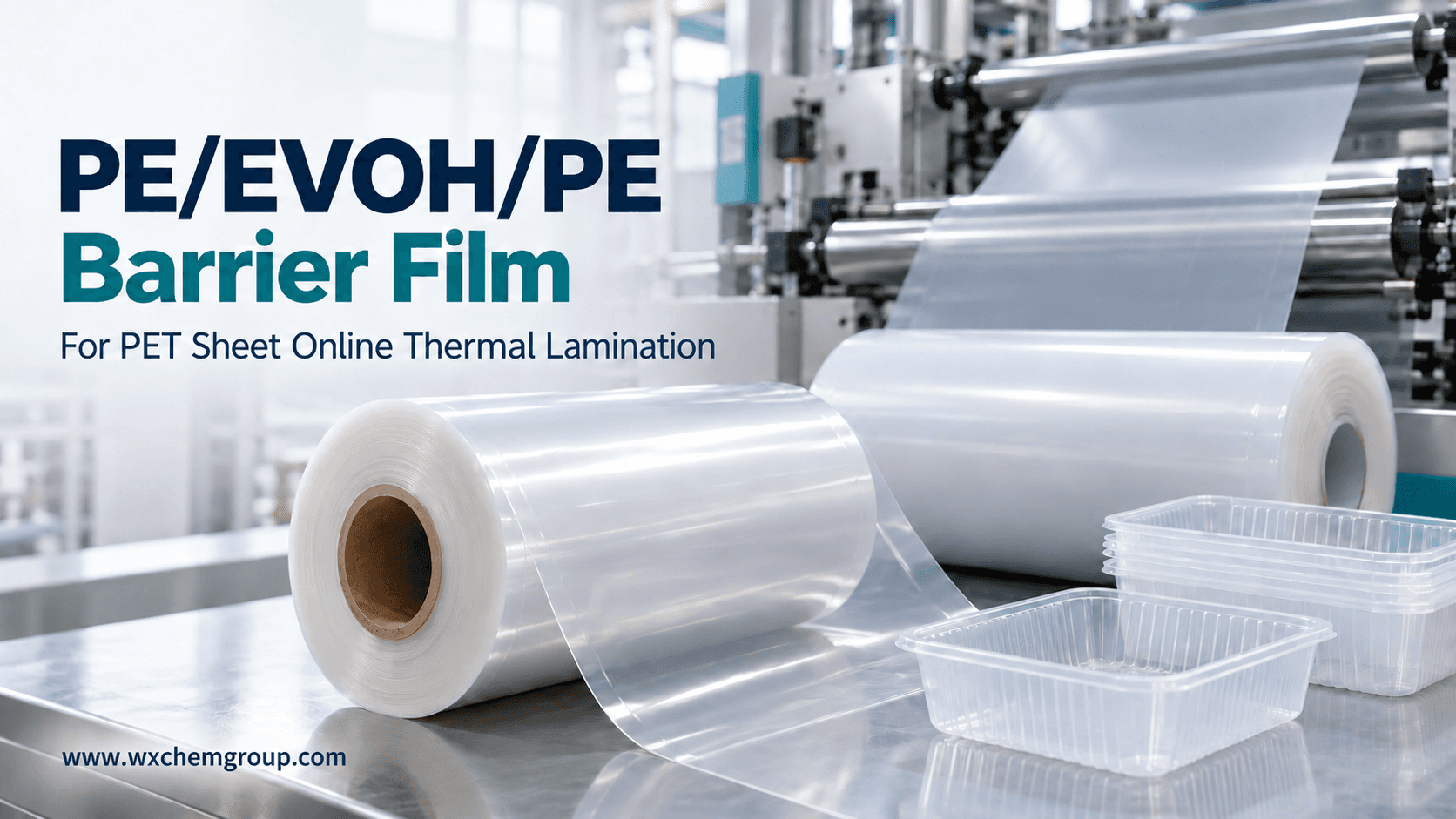
WANSYN supplies PE/EVOH/PE high-barrier film engineered for inline thermal lamination onto PET sheet during the sheet extrusion process. The film allows PET sheet manufacturers and thermoforming converters to produce a PET/PE/EVOH/PE barrier structure in one integrated route, reducing the need for a separate offline lamination step.
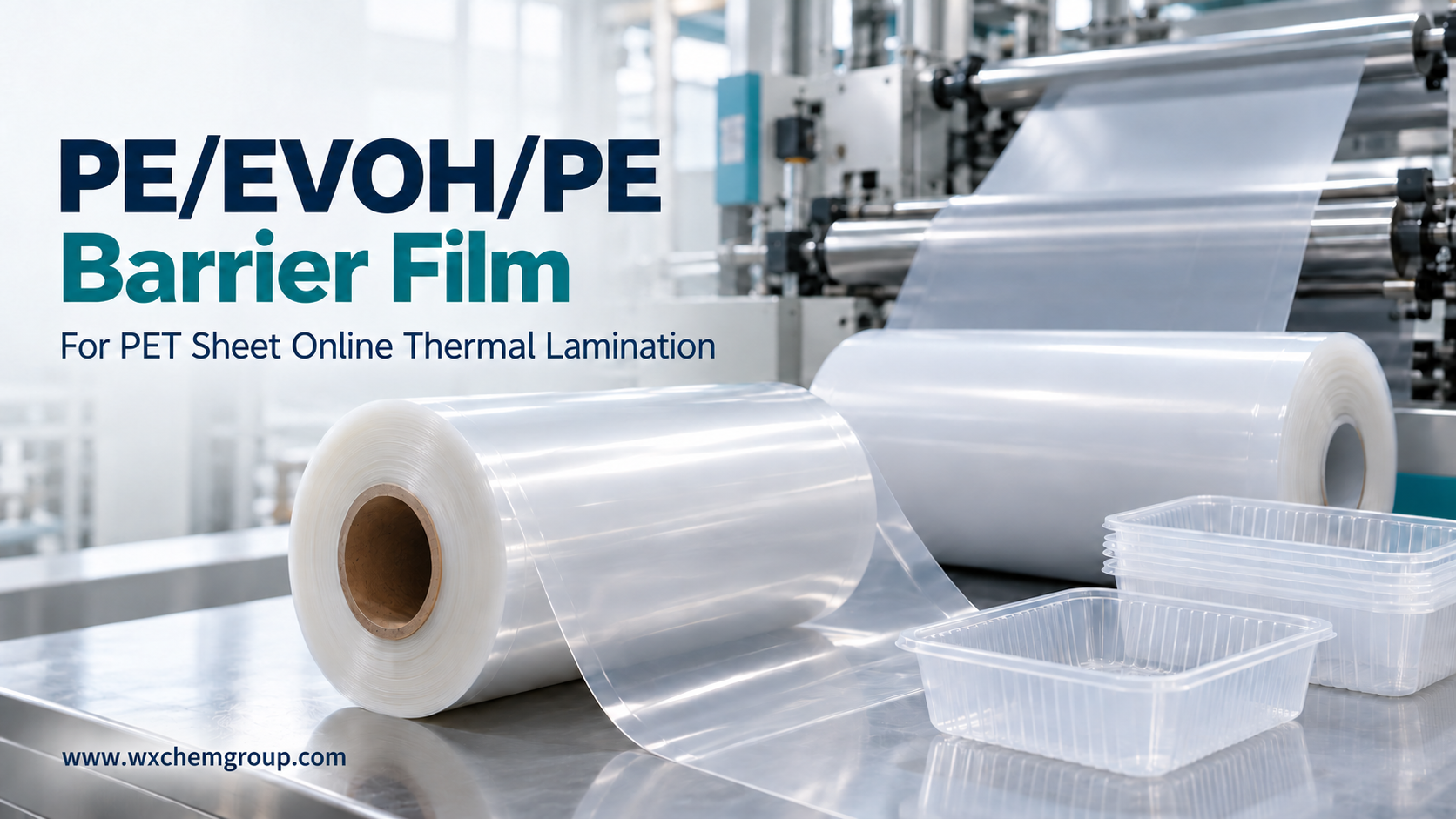
The finished laminated sheet is designed for thermoforming food trays and containers used in modified atmosphere packaging (MAP), including fresh meat, seafood, cheese, ready meals and other oxygen-sensitive foods.
Quick Answer
PE/EVOH/PE film for inline thermal lamination is a multilayer barrier film with an EVOH oxygen-barrier core and specially matched outer layers. It is laminated directly to hot PET sheet using controlled heat, pressure, line speed and tension. The resulting structure is typically:
PET sheet / PE / EVOH / PE
This is not a standard commodity barrier film. The PET-contact surface and the complete film structure must be matched to the PET sheet line and downstream thermoforming process.
Typical Product Parameters
| Item | Typical option |
|---|---|
| Product form | Roll film |
| Film structure | PE/EVOH/PE with PET-contact surface specially matched for inline thermal lamination |
| Typical total thickness | 50 μm; other structures subject to project evaluation |
| EVOH proportion | Commonly 8–12%, selected according to barrier target, forming depth and end use |
| Base sheet | APET, PET or qualified rPET sheet after compatibility evaluation |
| Lamination method | Inline heat-and-pressure lamination during PET sheet extrusion; no conventional solvent-based adhesive is added during lamination |
| Width | Customized to the PET sheet production line and finished sheet requirement |
| Core | 3-inch or 6-inch, subject to roll specification |
| Optional functions | High barrier, heat-sealing compatibility, easy-peel evaluation and anti-fog evaluation |
| Main applications | MAP trays for meat, seafood, cheese, ready meals and chilled foods |
Final specifications are confirmed according to the customer’s line conditions, thermoforming design, lidding film and target package performance.
How the Inline Lamination Process Works
- PET or rPET sheet is extruded on the customer’s existing sheet production line.
- The PE/EVOH/PE barrier film is unwound and introduced at the selected lamination position.
- Heat, pressure, line speed and film tension are controlled to achieve stable interfacial bonding.
- The laminated PET/PE/EVOH/PE sheet is cooled, wound or sent directly to downstream thermoforming.
- The final thermoformed tray is evaluated together with the lidding film and sealing conditions.
Successful inline lamination depends on the complete process window, not only the film specification. PET surface temperature, nip pressure, contact time, winding tension, line speed and cooling conditions must be considered together.
Why a Standard PE/EVOH/PE Film May Not Work
PET and PE belong to different polymer families. A conventional PE/EVOH/PE film made for offline adhesive lamination should not automatically be used for inline thermal lamination to PET sheet.
The film needs to be designed and tested for:
- PET-contact surface compatibility
- Stable bonding at the available lamination temperature
- Dimensional stability at production-line speed
- Controlled shrinkage and winding behavior
- Resistance to delamination during thermoforming
- Barrier retention after forming and corner thinning
- Compatibility with the selected lidding film and sealing window
WANSYN evaluates the barrier film together with the PET sheet process and final package requirements rather than treating the film as an isolated component.
Key Advantages
1. Integrates Barrier Function into PET Sheet Production
The barrier layer can be added during PET sheet extrusion, helping reduce a separate offline lamination operation.
2. EVOH Oxygen-Barrier Performance
The EVOH core helps reduce oxygen transmission for shelf-life-sensitive foods. Actual package barrier depends on EVOH grade and proportion, total thickness, humidity, thermoforming draw ratio, tray design, lidding film and seal integrity.
3. Designed for Downstream Thermoforming
The complete laminate is evaluated for forming stability, interlayer bonding and barrier retention after draw-down.
4. Supports MAP Packaging Development
The structure can be matched with suitable lidding films for fresh meat, seafood, cheese, ready meals and other MAP applications.
5. Flexible Project Customization
Film width, thickness, EVOH proportion, sealing requirement and optional anti-fog or easy-peel functions can be evaluated according to the application.
Typical Applications
- Fresh meat and processed-meat trays
- Seafood and fish trays
- Cheese and dairy packaging
- Ready-meal and prepared-food containers
- Chilled food packaging
- Modified atmosphere packaging (MAP)
- High-barrier PET thermoforming sheet production
Barrier Performance and Testing
For one previously tested 50 μm high-barrier film, a third-party laboratory reported an oxygen transmission rate reference value of 0.14 cm³/(m²·24 h·0.1 MPa) under GB/T 19789-2021. This value applies only to the tested sample and stated conditions.
Final performance must be verified on the customer’s exact film structure and finished thermoformed package. EVOH barrier is influenced by humidity, temperature, forming depth, corner thinning, sealing quality and the barrier performance of the lidding film.
Recommended project tests include:
- Film thickness and layer-structure confirmation
- Bond strength before and after thermoforming
- OTR and, where required, WVTR testing
- Thermoforming draw-depth and corner-thinning evaluation
- Heat-seal curve, seal strength and easy-peel testing
- Leak testing and finished-pack shelf-life validation
Information Required for Technical Evaluation
To recommend the correct trial film, please provide:
- PET sheet type: APET, PET or rPET
- Current sheet thickness and finished sheet width
- Required barrier-film thickness and width
- PET sheet line model, line speed and available lamination position
- Current lamination temperature, pressure and tension conditions
- Final tray dimensions, forming depth and corner radius
- Food application and storage conditions
- Target OTR/WVTR or required shelf life
- Lidding-film structure and sealing temperature
- Required monthly or annual quantity
- Whether a sample roll or production trial is required
How WANSYN Supports Your Project
- PE/EVOH/PE barrier-film structure selection
- Inline thermal lamination compatibility evaluation
- Film width and roll-specification customization
- PET/PE/EVOH/PE laminated sheet development
- Thermoforming and barrier-performance evaluation
- Lidding-film, heat-seal and easy-peel matching suggestions
- Sample film, sample sheet and trial-roll support
For deeper technical background, read our guide: PE/EVOH/PE Film for Online Thermal Lamination to PET Sheet. If you need a finished barrier sheet rather than a lamination film, see our PET/EVOH/PE High-Barrier Thermoforming Sheet.
FAQ
Can any PE/EVOH/PE film be laminated to PET sheet online?
No. A standard barrier film may not provide reliable PET bonding, dimensional stability or thermoforming performance. The PET-contact layer and lamination window must be specifically matched.
Does inline thermal lamination require glue?
The process is designed to laminate through heat, pressure and material matching without adding a conventional solvent-based adhesive during lamination. Final suitability must be confirmed on the customer’s line.
What film thickness is commonly used?
50 μm is a common starting point. The final thickness and EVOH proportion depend on the barrier target, tray design, forming depth and package conditions.
Can the film be used with rPET sheet?
Qualified rPET sheet can be evaluated, but recycled content, surface condition, process temperature and thermoforming stability must be verified through trials.
Will the original film OTR equal the finished tray OTR?
Not necessarily. Thermoforming stretches and thins the structure, especially at corners and deep-draw areas. Finished-package barrier must be tested after forming and sealing.
Request a Sample or Technical Review
Send WANSYN your PET sheet specification, line conditions, barrier target, tray drawing and lidding-film structure. We can prepare a suitable sample or trial-roll proposal for your inline thermal lamination project. Ask about PE/EVOH/PE barrier film samples matched to your PET sheet line.
Contact WANSYN for samples, technical evaluation and quotation.