
PE Film for Online Thermal Lamination to PET Sheet
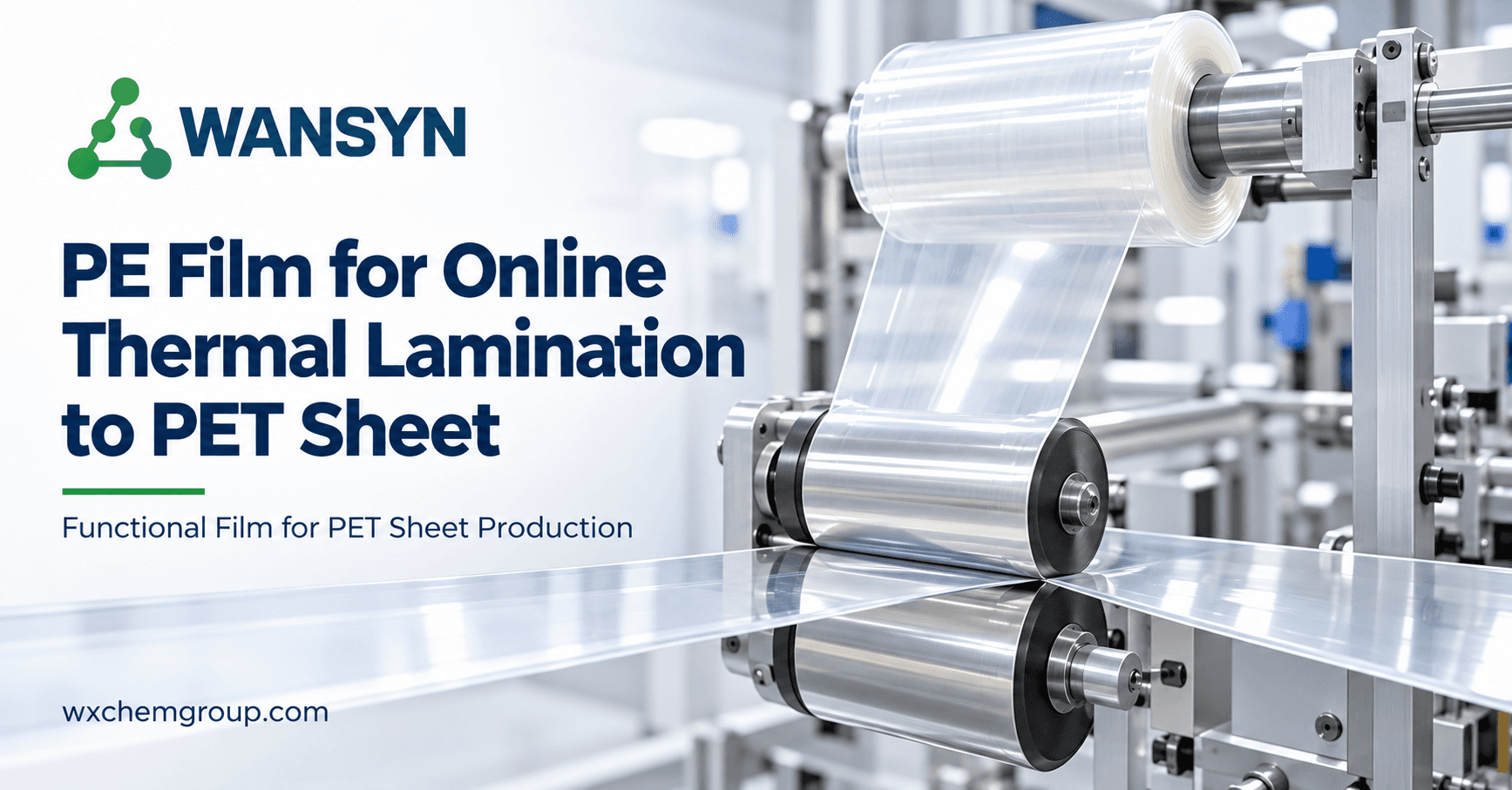
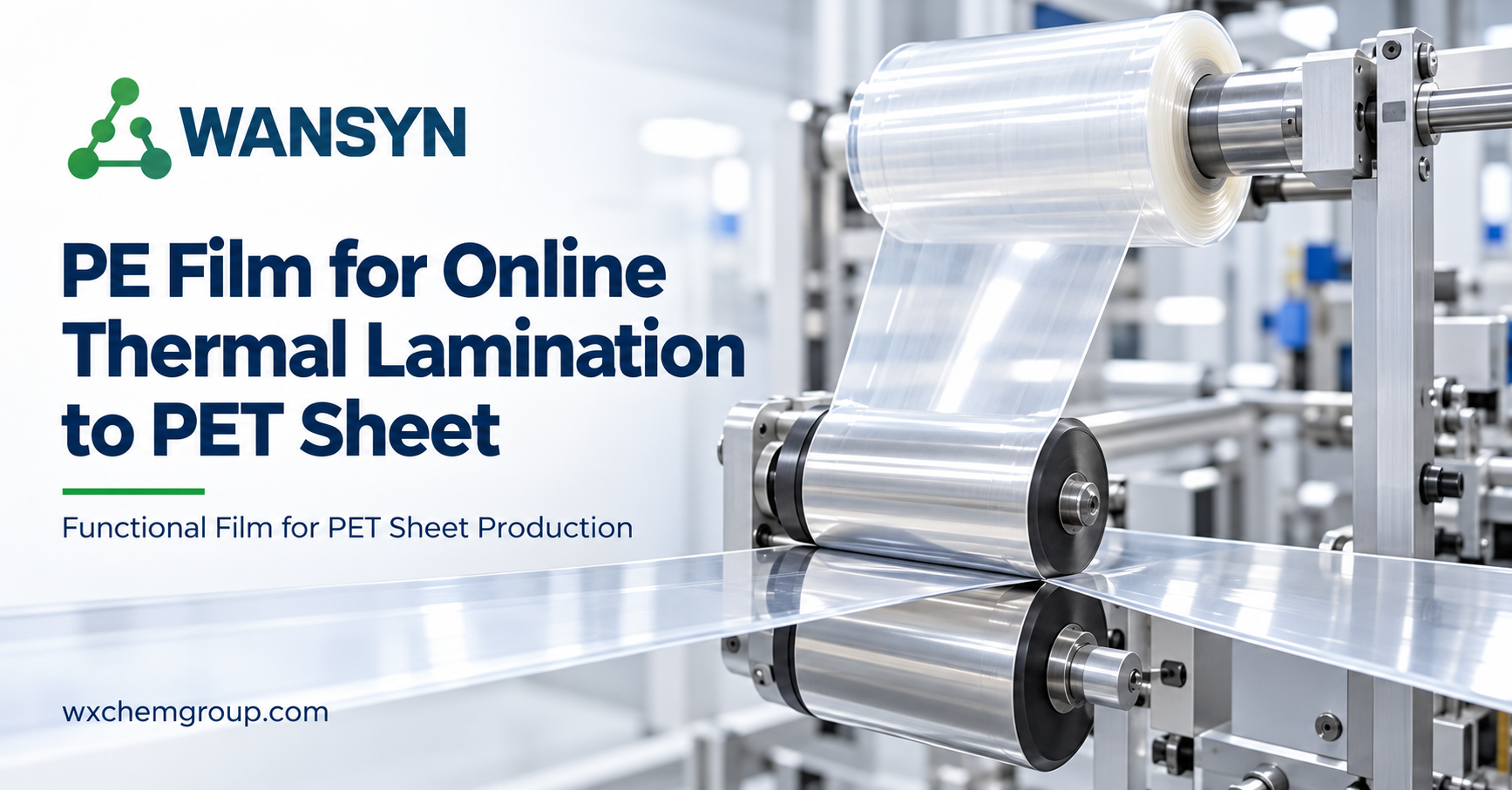
WANSYN supplies PE film for online thermal lamination onto PET sheet during sheet production. The film is specially matched to the PET-contact interface so converters can develop PET/PE thermoforming sheet with an exposed PE heat-sealing surface, without adding conventional lamination adhesive at the inline station.
Starting film specifications include 30 μm and 50 μm. Width, roll dimensions, winding direction and grade selection are reviewed according to the PET sheet line, forming process and final packaging application.
Quick Answer
PE film for PET inline thermal lamination is a functional film engineered to bond to PET sheet under a qualified combination of heat, pressure, contact time and web tension. The resulting PET/PE sheet combines the forming and support function of the PET substrate with a PE surface selected for the intended sealing system.
Simplified finished structure: PET sheet / PET-compatible lamination interface / PE sealing film.
The commercial name PET/PE does not describe every modified contact layer or interface material. Confirm the complete construction and identify the PET-contact face and exposed sealing face before trials.
Typical Product Parameters
| Item | Specification / selection basis |
|---|---|
| Product | PE film for online thermal lamination to PET sheet |
| Supply form | Transparent roll film |
| Starting thickness options | 30 μm (0.03 mm) and 50 μm (0.05 mm) |
| Base sheet | PET / APET; qualified rPET sheet subject to compatibility evaluation |
| Lamination route | Inline heat-and-pressure lamination without adding conventional adhesive at the lamination station |
| Width | Customized to the PET sheet line and finished-sheet width |
| Roll length, core and winding | Confirmed according to unwinder capacity, roll-handling limits and face orientation |
| Main function | PE heat-sealing surface on a PET-based thermoforming sheet |
| Optional requirements | Seal strength, easy peel and anti-fog requirements evaluated separately |
| Supply scope | Lamination film; finished laminated sheets can be discussed separately |
Film specification, tolerance, sample quantity and commercial terms are confirmed for the individual project. A thickness option alone does not qualify a film for a production line or sealing application.
Why Use a Specially Matched PE Film?
PET and PE are different polymer families. Ordinary PE packaging film or PE film intended for offline adhesive lamination should not automatically be used on a PET inline thermal lamination station.
The PET-contact surface must achieve reliable bonding within the available process window while the exposed face retains the required sealing behavior. Dimensional stability, film tension, cooling and winding conditions also affect the finished laminate.
- Match the lamination-contact face to the PET substrate and surface condition.
- Check bond strength before and after thermoforming.
- Control shrinkage, wrinkles, stretching, curl and winding behavior.
- Validate the exposed PE face with the actual lidding film.
- Document the qualified temperature, pressure, speed and tension settings.
Inline Thermal Lamination Process
- Produce the PET base sheet. Stabilize sheet thickness and surface condition using the selected PET or qualified rPET formulation.
- Feed the PE film. Unwind the film with its designated PET-contact face in the correct orientation.
- Laminate at the matched station. Use controlled heat, nip pressure, contact time, speed and tension to establish the bond.
- Cool and handle the laminate. Wind the PET/PE sheet or transfer it to inline thermoforming, depending on the equipment.
- Form and seal. Evaluate the tray together with the actual lid, sealing tool and packaging conditions.
There is no universal lamination temperature for every PET line. Trial conditions should be established with the specific film grade, PET formulation, gauge, line speed and lamination position.
Main Benefits
Adds a PE Heat-Sealing Surface
The PE layer provides a surface that can be matched to compatible lidding materials, helping PET sheet producers develop sealable thermoforming structures for food packaging.
Integrates Lamination into Sheet Production
PE film for online thermal lamination can reduce the need for a separate offline lamination step on a suitably equipped line. Actual productivity, operating cost and material yield depend on the qualified process and accepted output.
Supports Different Film Gauges
30 μm and 50 μm options allow evaluation of different layer designs. Choose the thickness based on bonding, forming draw, minimum seal-layer thickness and finished-package requirements rather than film price alone.
Adaptable Roll Format
Film width, roll length, core size and winding direction can be matched to equipment requirements. Confirm the maximum roll diameter and weight before sampling.
Typical Applications
- PET/PE thermoforming sheet production
- Heat-sealable food trays and containers
- Selected meat, seafood and prepared-food packaging
- Chilled-food and supermarket packaging
- Packaging projects requiring a compatible PE sealing face on PET sheet
Food-contact documentation, storage conditions and package performance must be reviewed for the selected grade and intended market. Frozen use, VSP, hot fill, microwave and retort suitability require separate qualification of the full package.
PE Film or PE/EVOH/PE Barrier Film?
| Requirement | PE inline-lamination film | PE/EVOH/PE inline barrier film |
|---|---|---|
| Primary function | Introduce a PE sealing surface | Introduce EVOH oxygen barrier plus an appropriate sealing surface |
| EVOH layer | Not part of the PE-only product described here | Included in the qualified barrier-film design |
| Selection focus | PET-interface bonding, forming and sealing | Those checks plus barrier targets and performance after forming |
| MAP projects | Requires assessment against the complete package specification; no high-barrier claim is implied | Evaluate when the required oxygen-barrier performance calls for an EVOH structure |
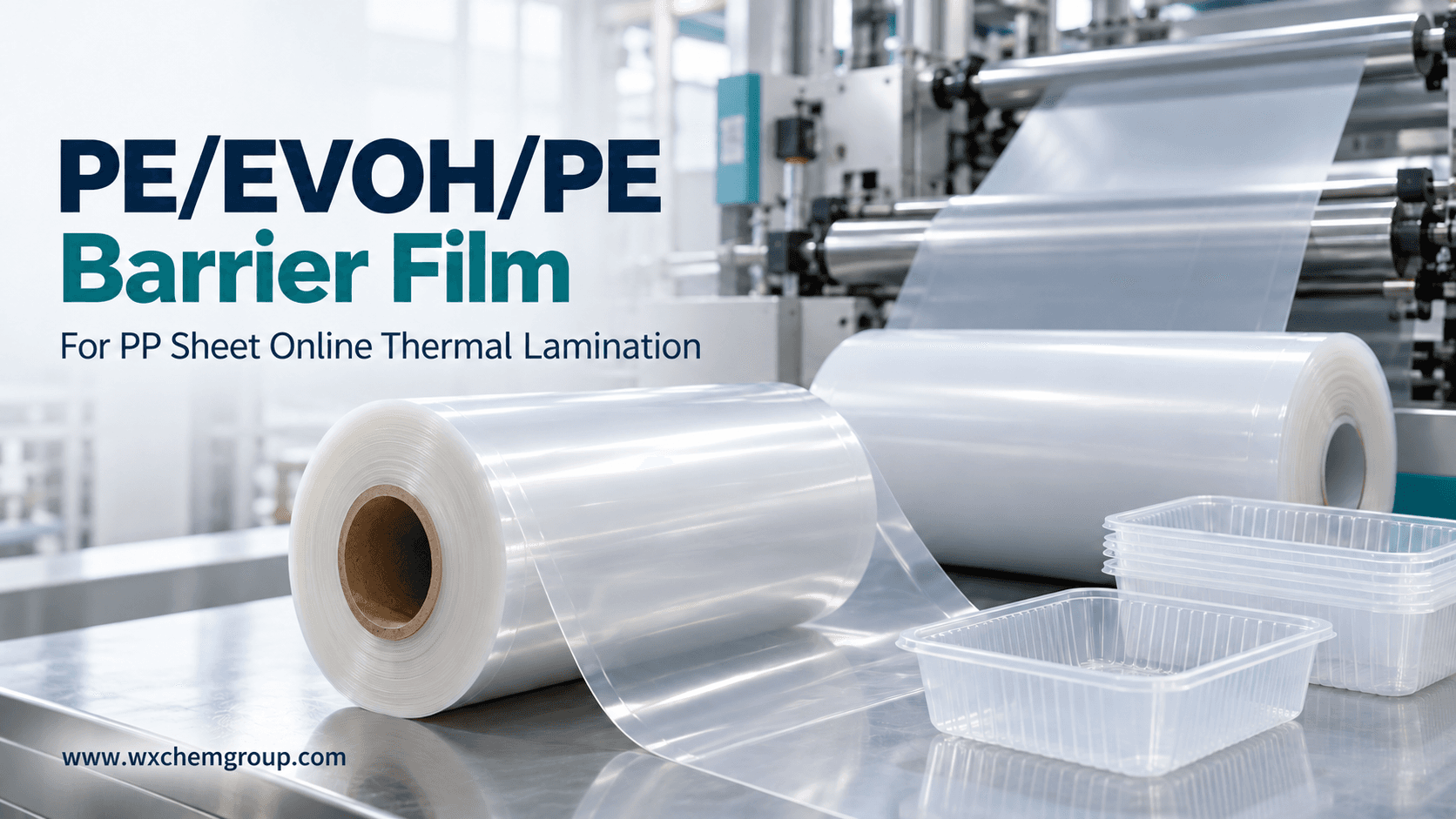
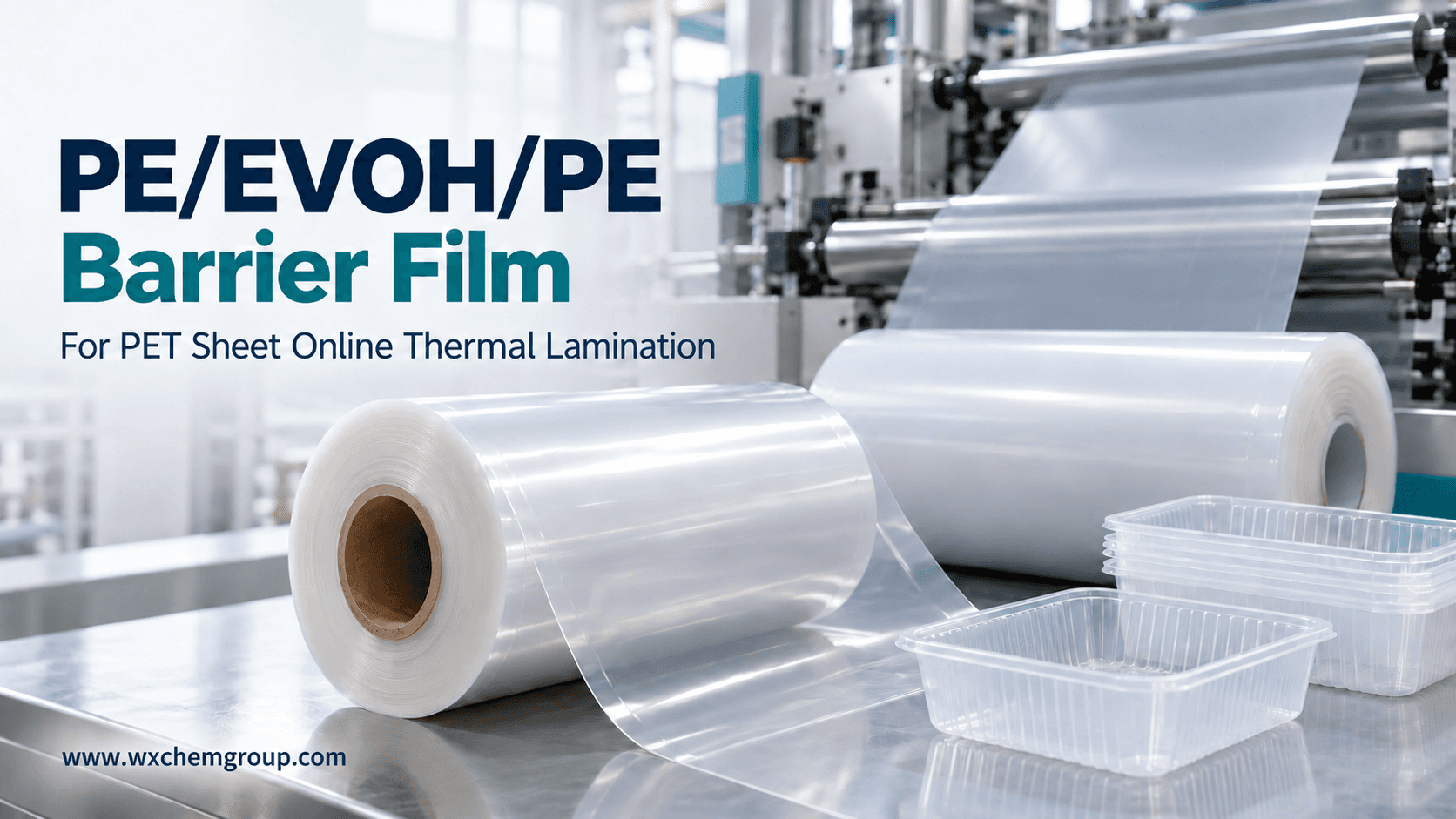
PE film for online thermal lamination is not equivalent to an EVOH high-barrier film. If your project requires a specified OTR or extended shelf life, review our PE/EVOH/PE barrier film for PET sheet lines and validate the final package.
Recommended Trial Checks
- Thickness, width and correct film-face orientation
- Appearance, web stability, wrinkles and curl at production speed
- Bond strength after lamination, conditioning and thermoforming
- Minimum layer thickness at formed corners and walls
- Blocking, winding and roll-storage behavior
- Seal-strength curve with the intended lidding film
- Leak testing and finished-pack validation under actual storage conditions
Information Required for Samples and Quotation
To select a trial specification, send WANSYN:
- PET / APET / rPET grade and current sheet structure
- Base-sheet thickness and required finished-sheet width
- PE film thickness: 30 μm, 50 μm or another requirement
- Film width, core size, maximum roll diameter/weight and winding direction
- Line model, lamination position, speed and available temperature/pressure controls
- Whether the sheet is wound or directly thermoformed inline
- Tray dimensions, forming depth and corner radius
- Packed food, storage conditions and sealing requirements
- Lidding-film structure, desired seal strength and easy-peel requirement
- Trial quantity, forecast consumption and required food-contact documentation
FAQ
Can ordinary PE film be laminated directly to PET sheet without glue?
Do not assume it can. Use a PE film specifically matched to the PET-contact interface and qualify it within your line’s thermal lamination window.
What PE film thicknesses can WANSYN support?
30 μm and 50 μm are starting options for evaluation. The final grade, thickness and roll specification depend on the line and finished package.
Does the process use conventional lamination adhesive?
The proposed route uses heat, pressure and material matching without adding conventional lamination adhesive at the inline station. Confirm the full film construction for your project.
Can the PE film be used on rPET sheet?
Qualified rPET sheet can be evaluated. Recycled content, surface condition, processing temperature, bond strength and forming behavior must be checked during trials.
Is this an EVOH high-barrier film?
No. This product adds a PE sealing layer. For EVOH oxygen-barrier requirements, select the appropriate PE/EVOH/PE barrier grade.
Request a Trial Roll
Share your PET sheet specification, line conditions, film width and required trial quantity. WANSYN can review a suitable PE film for online thermal lamination proposal and the acceptance checks needed for your production trial.
Contact WANSYN for samples, technical evaluation and quotation. Explore the full online thermal lamination film range for related solutions.