What Is a PVC Heat Stabilizer?
A PVC heat stabilizer is an additive or additive package that slows the thermal degradation of PVC during processing. It helps limit discoloration and maintain a usable processing window. The right system depends on the PVC formulation, processing method and requirements of the finished product.
Why PVC Needs a Heat Stabilizer
During extrusion, calendering, injection molding or high-speed mixing, PVC is exposed to heat and mechanical shear. Structural defects in the resin can start a degradation sequence: hydrogen chloride (HCl) is released, the HCl accelerates further degradation in an autocatalytic "zipper" reaction, conjugated double bonds form, and the material darkens and loses strength.
A stabilizer slows this process so the melt can be processed and the finished part keeps its intended color and properties. In other words, it slows thermal degradation; it does not "prevent" degradation or "guarantee" finished-product performance.
Symptoms are clues, not a diagnosis
Early yellowing, black specks, haze and plate-out can be useful troubleshooting clues. They can also result from thermal history, contamination, equipment condition or the lubrication balance, so they should not be pinned on stabilizer dosage alone.
Common Chemical Systems
Chemical system describes the active chemistry. The main families are calcium-zinc (Ca-Zn), lead-based systems and organotin (including methyl tin). Barium-zinc (Ba-Zn), rare-earth and organic-based systems are used in specific formulations and regions.
Calcium-zinc (Ca-Zn)
Calcium salts act mainly as HCl scavengers while zinc compounds contribute initial color and processing stability; the two work synergistically. Ca-Zn is a lead-free option used across many rigid and flexible applications, subject to the specific grade and formulation. Compliance with RoHS or REACH depends on the exact grade, target market and finished-part testing; it is not automatic for the whole family.
Lead-based systems
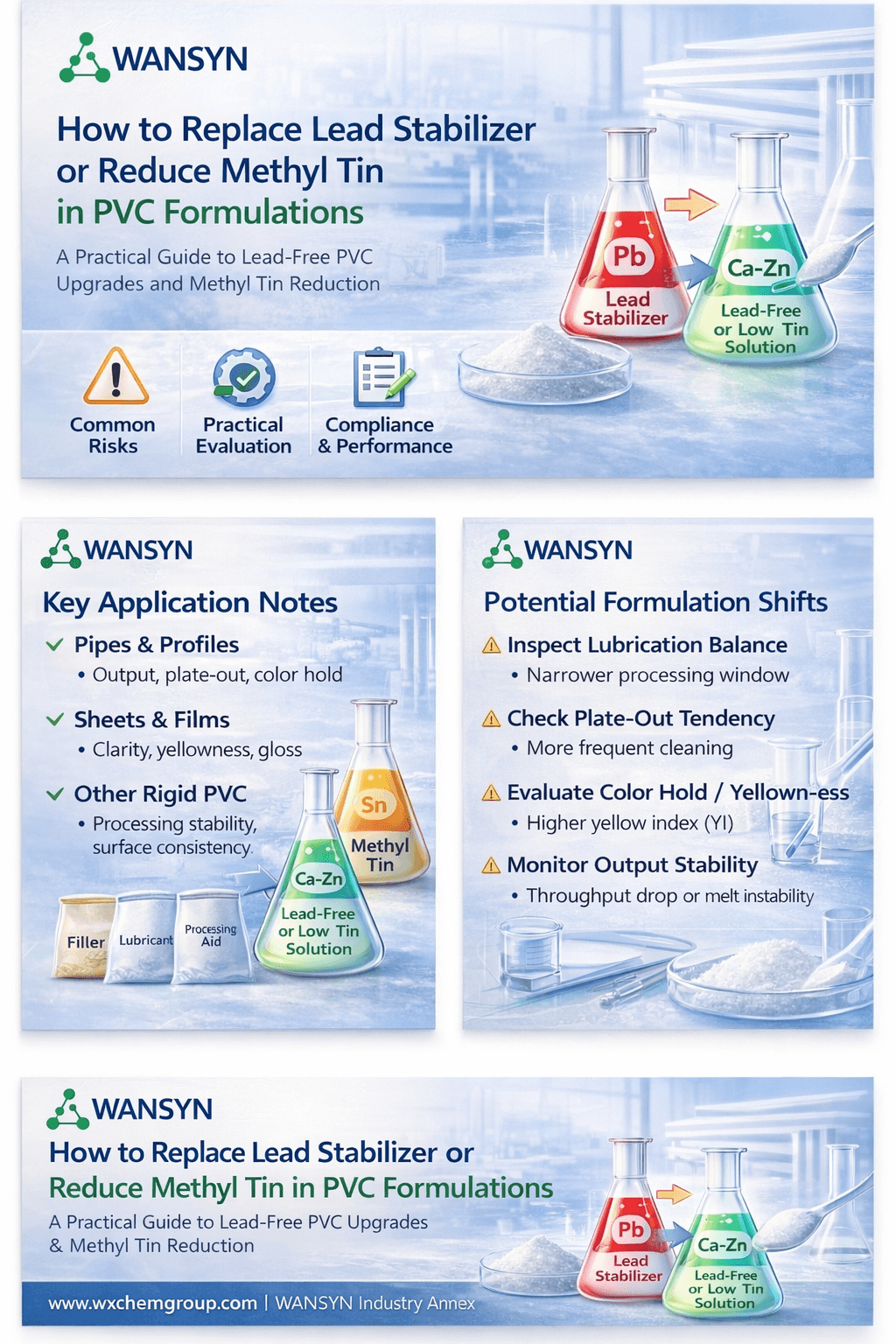
Lead systems offer strong long-term heat stability and were historically low cost, but toxicity drives strict regulation and phase-outs in many markets, creating compliance and market-access risk for consumer and export products.
Tin and organotin (including methyl tin)
Organotin is often selected where clarity and heat stability are the priority, such as transparent rigid sheet, clear film and high-clarity injection parts. It is more costly and may need lubrication adjustment. Reducing tin content or combining it with Ca-Zn can be evaluated in a suitable formulation; it is not a direct one-for-one replacement.
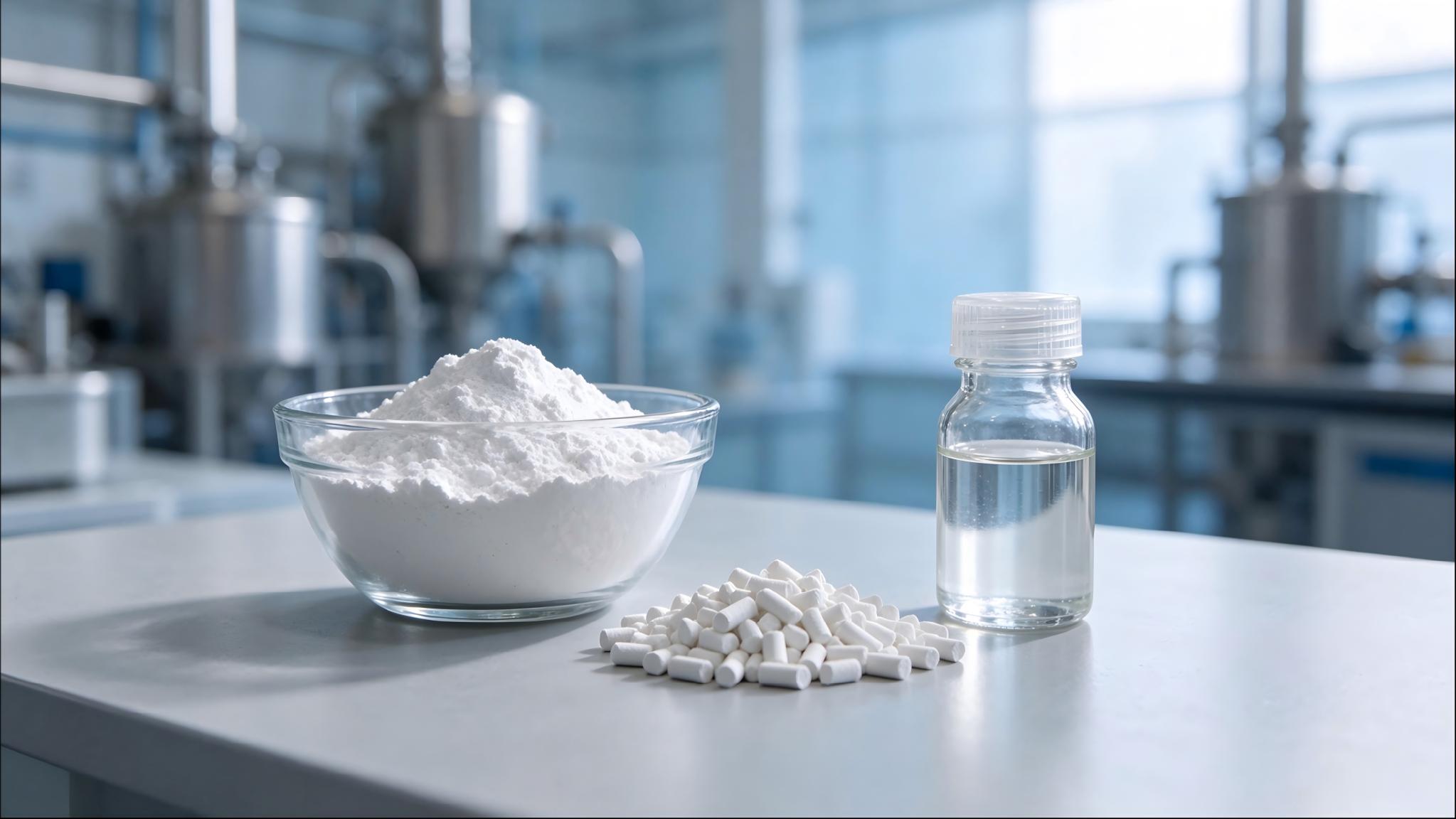
Powder, Liquid and One-Pack: Three Different Thing
These three terms describe different dimensions and are often mixed up:
- Chemical system — Ca-Zn, lead or organotin: the active chemistry.
- Product form — powder or liquid: how the product is supplied and dosed.
- One-pack — a pre-blended additive package that may contain a stabilizer, co-stabilizers and lubricants; its exact composition depends on the grade.
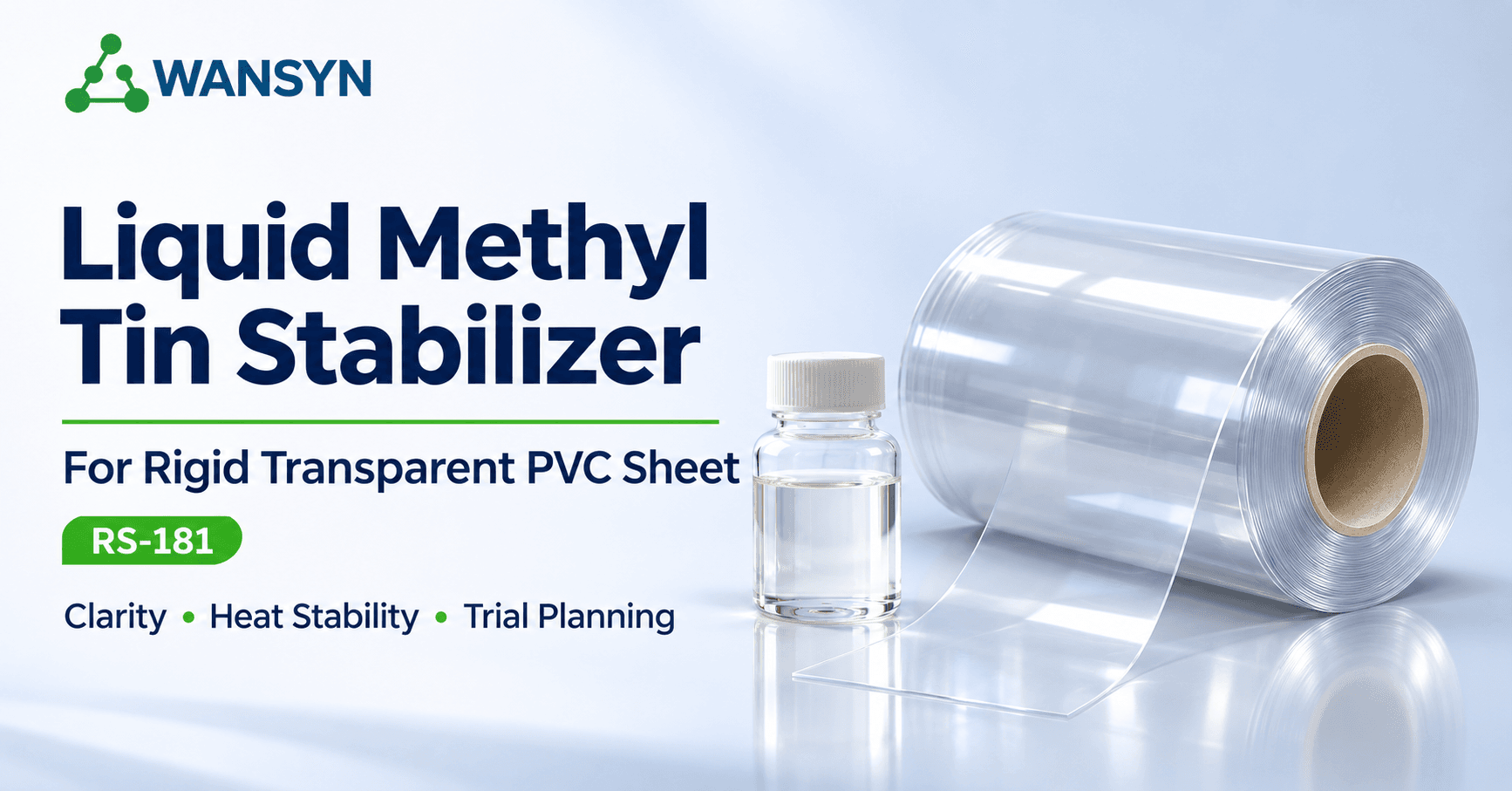
One-pack is not a fourth chemical system. A grade can be both: G-80 is a powder Ca-Zn stabilizer and also a one-pack. Equally, "powder = rigid, liquid = flexible" is not a valid rule: RS-181, a liquid methyl tin grade, can be evaluated for rigid transparent sheet and is a good counter-example.
How to choose between forms depends on the finished product, process and dosing setup, not on the form label alone.
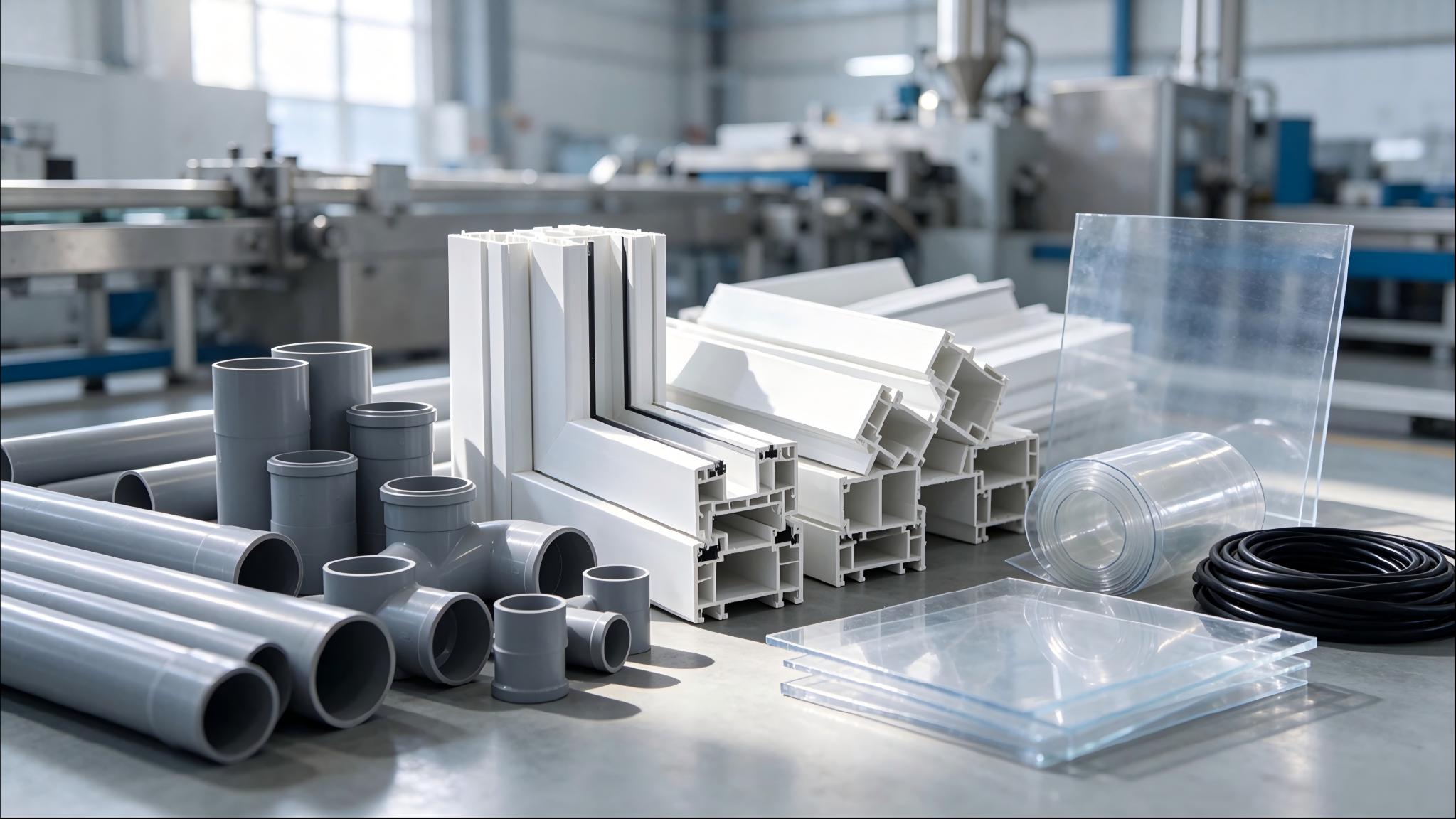
Typical Application Examples
The examples below are starting points, not final selections. Rigid transparent sheet and flexible transparent sheet are a useful pair to compare: both require transparency, but their formulations, processes and screening criteria differ. Detailed selection, troubleshooting, testing and compliance topics are covered in our related guides.
| Application | Direction to evaluate | Reference grade |
|---|---|---|
| Flexible opaque or white PVC film, artificial leather | Powder Ca-Zn | FR-300 |
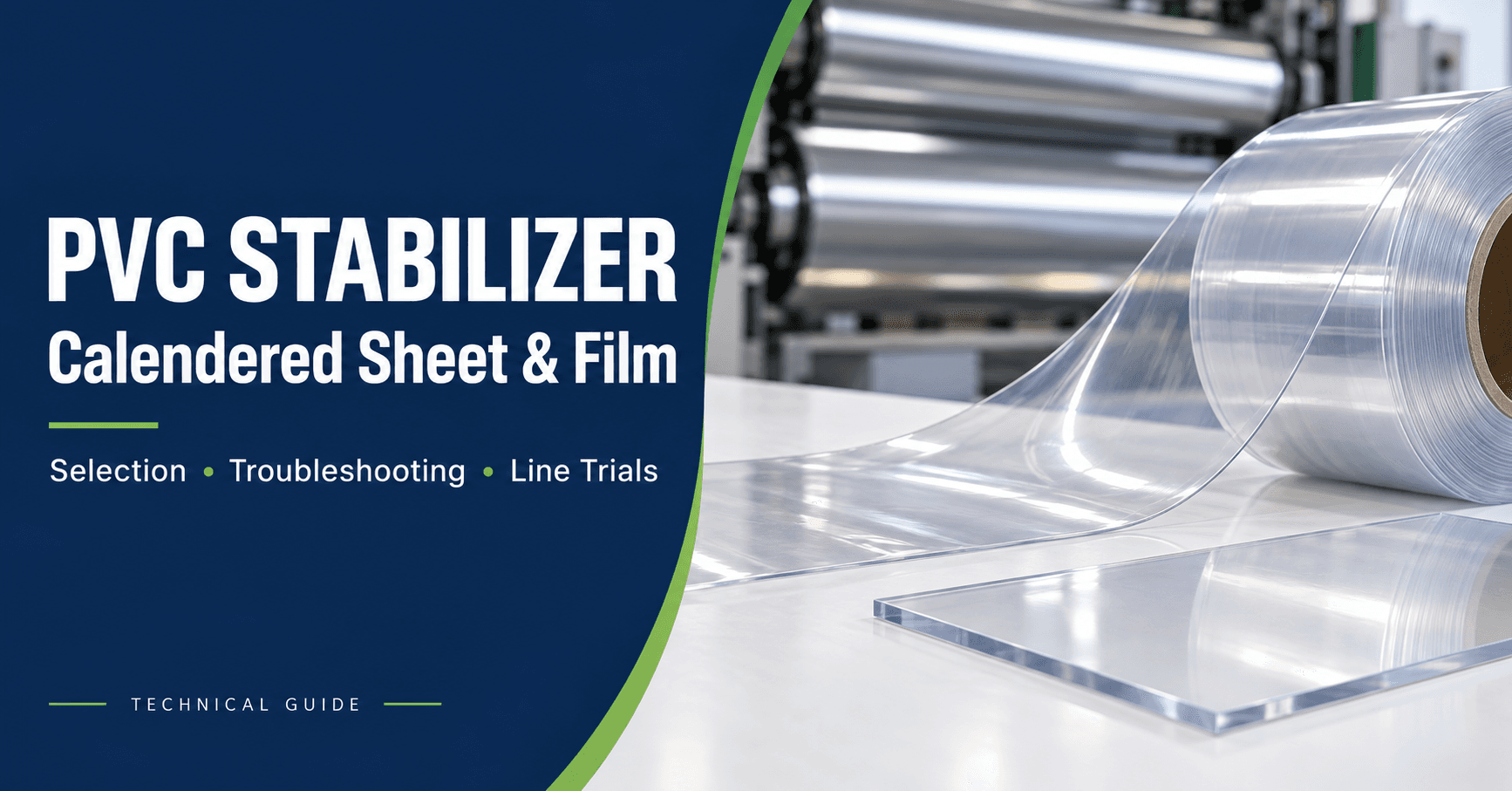
| Rigid calendered sheet and film | Grade to be matched to the formulation | Y-181 |
| Sheet, film and extrusion processes | Powder Ca-Zn; tin reduction to be evaluated in a suitable formulation | Y-550 |
| Rigid transparent sheet (trial candidate) | Liquid methyl tin, subject to a line trial | RS-181 |
| High-clarity rigid products and injection | Methyl tin | Methyl Tin series |
What to Prepare Before Requesting a Sample
Please share:
- Product type and end use (rigid or flexible, transparent or opaque)
- Processing method and conditions
- Current stabilizer system and dosage
- The problem you want to solve
- Target market and compliance requirements
With this information we can suggest a grade and a controlled line trial with clear pass/fail criteria.
FAQ
What is the difference between a stabilizer and a plasticizer?
A stabilizer slows PVC's thermal degradation during processing; a plasticizer increases flexibility. They are different additives selected for different reasons.
Is one-pack a chemical system?
No. One-pack is a pre-blended additive package. Its chemistry may be Ca-Zn or another system, and its composition depends on the grade.
Can a liquid stabilizer be used for rigid PVC?
Yes. Liquid methyl tin grades such as RS-181 can be evaluated for rigid transparent sheet. The powder or liquid form does not by itself decide rigid versus flexible use; the formulation and process do.
Can Ca-Zn grades be used for drinking-water pipes?
Ca-Zn can be a candidate, but suitability depends on the specific grade, target-market requirements and finished-part validation. Do not assume that any Ca-Zn grade is automatically approved for drinking-water contact.
Can lead stabilizers be replaced directly?
Not one-for-one. A switch requires rebalancing lubrication and the full formulation and confirming it in a trial.
When should methyl tin be considered over Ca-Zn?
When the priority is maximum clarity and heat stability, subject to cost and formulation evaluation.
Planning Your Next Trial?
Share your product type and use, processing method, current stabilizer and dosage, the problem you want to solve, and your target market. We will suggest a grade and support sample testing on your line.