
CaZn PVC Stabilizers for SPC & LVT Flooring: A Practical Guide for Asian Manufacturers
SPC (Stone Plastic Composite) and LVT (Luxury Vinyl Tile) flooring are growing rapidly in Southeast and South Asia – especially in countries like Vietnam, Indonesia, India and Bangladesh. Builders, retailers and end users all want floors that are:
-
Waterproof and dimensionally stable
-
Easy to install and maintain
-
Comfortable to walk on, even in hot and humid climates
Behind every good floor, there is a good PVC formulation and stabilizer system. If the stabilizer is not properly selected, SPC and LVT lines can face problems such as warpage, yellowing, plate-out and surface defects.
This guide explains, in simple technical language:
-
How SPC/LVT cores are built
-
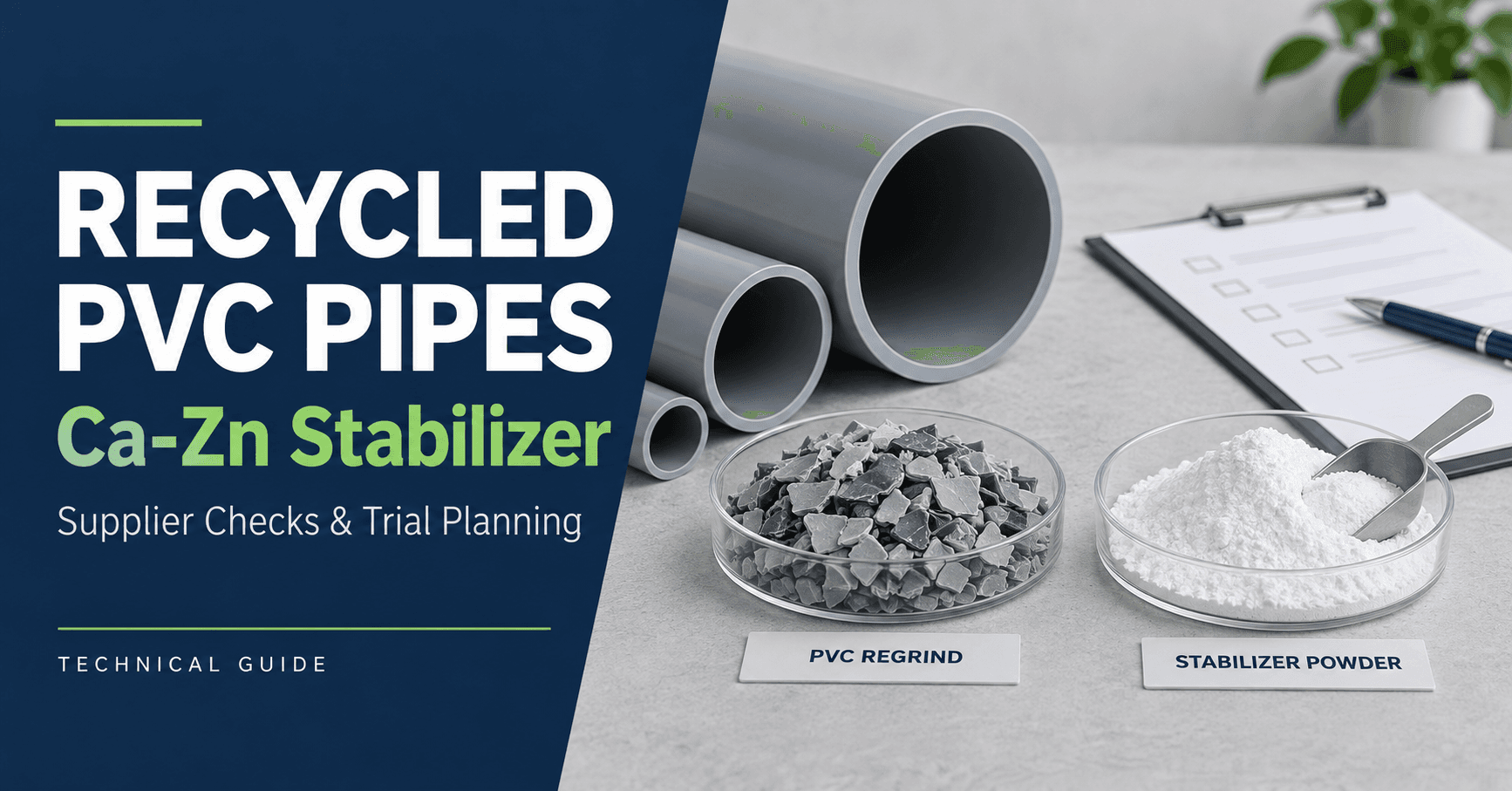
What CaZn PVC stabilizers (calcium-zinc stabilizers) do in the formulation
-
Typical problems manufacturers in Asia face
-
How a well-designed CaZn stabilizer package can help
1. Quick overview: SPC & LVT structure
Although there are many designs, most SPC and LVT planks share a similar multilayer structure:
-
Wear layer – transparent, provides scratch and stain resistance
-
Printed film – wood or stone design
-
PVC core layer – PVC resin + limestone/filler + stabilizer + lubricants + other additives
-
Underlay or backing – foam or other cushioning layer (optional)
For SPC flooring, the core is rigid and has high filler content (often 60–70% limestone).
For LVT flooring, the core is more flexible but still based on PVC + fillers + additives.
The core layer is where the CaZn PVC stabilizer works. It influences:
-
Dimensional stability (expansion/shrinkage)
-
Internal stress and tendency to warp or curl
-
Colour stability and long-term appearance
-
Processability on the extrusion line
2. What is a CaZn PVC stabilizer?
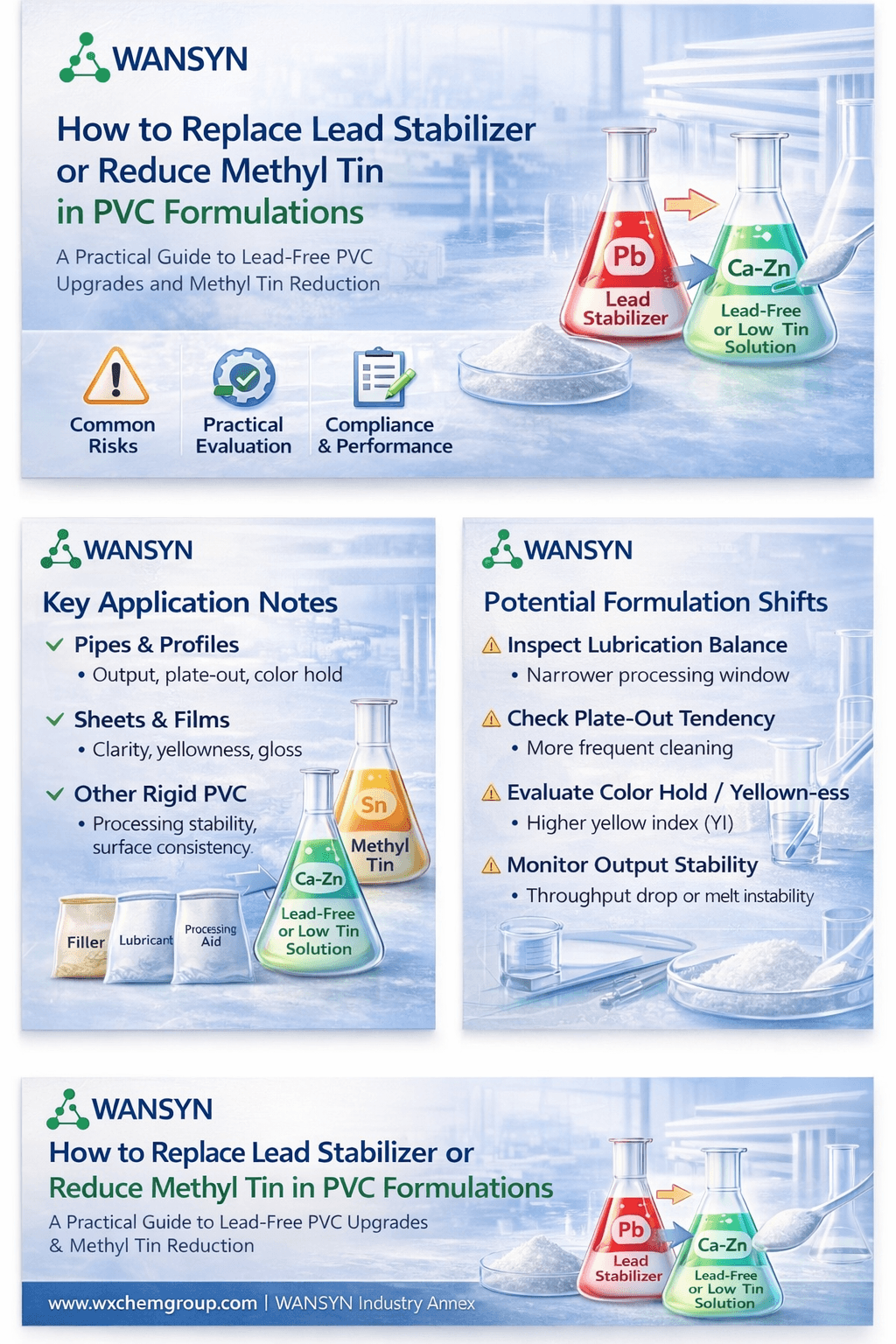
A CaZn PVC stabilizer is a lead-free stabilizer system based on calcium and zinc carboxylates, combined with co-stabilizers and a balanced internal/external lubricant package. Compared with traditional lead stabilizers, CaZn systems offer:
-
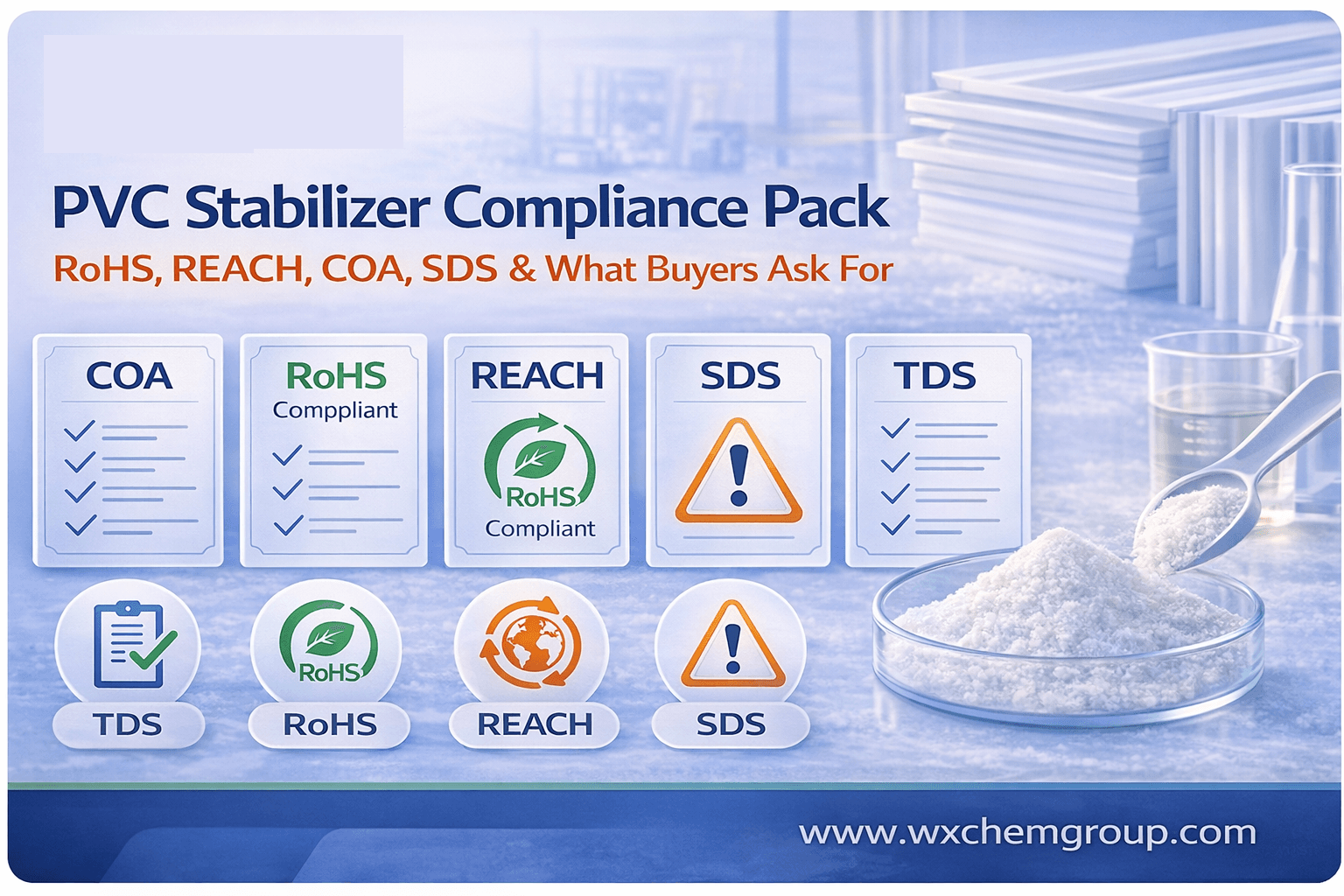
Lead-free, RoHS and REACH friendly formulations
-
Low odour, better for indoor air quality
-
Good initial colour and long-term colour hold
-
Compatibility with high filler levels and recycled PVC (when properly designed)
In many Asian markets, regulators and brand owners are gradually moving away from lead stabilizers in flooring. As a result, CaZn PVC stabilizers for SPC and LVT flooring have become an important topic for manufacturers in Vietnam, Indonesia, India, Bangladesh and neighbouring countries.
3. Typical SPC / LVT production issues in Asian factories
Based on discussions with processors in Asia, the same issues keep coming back on SPC and LVT lines:
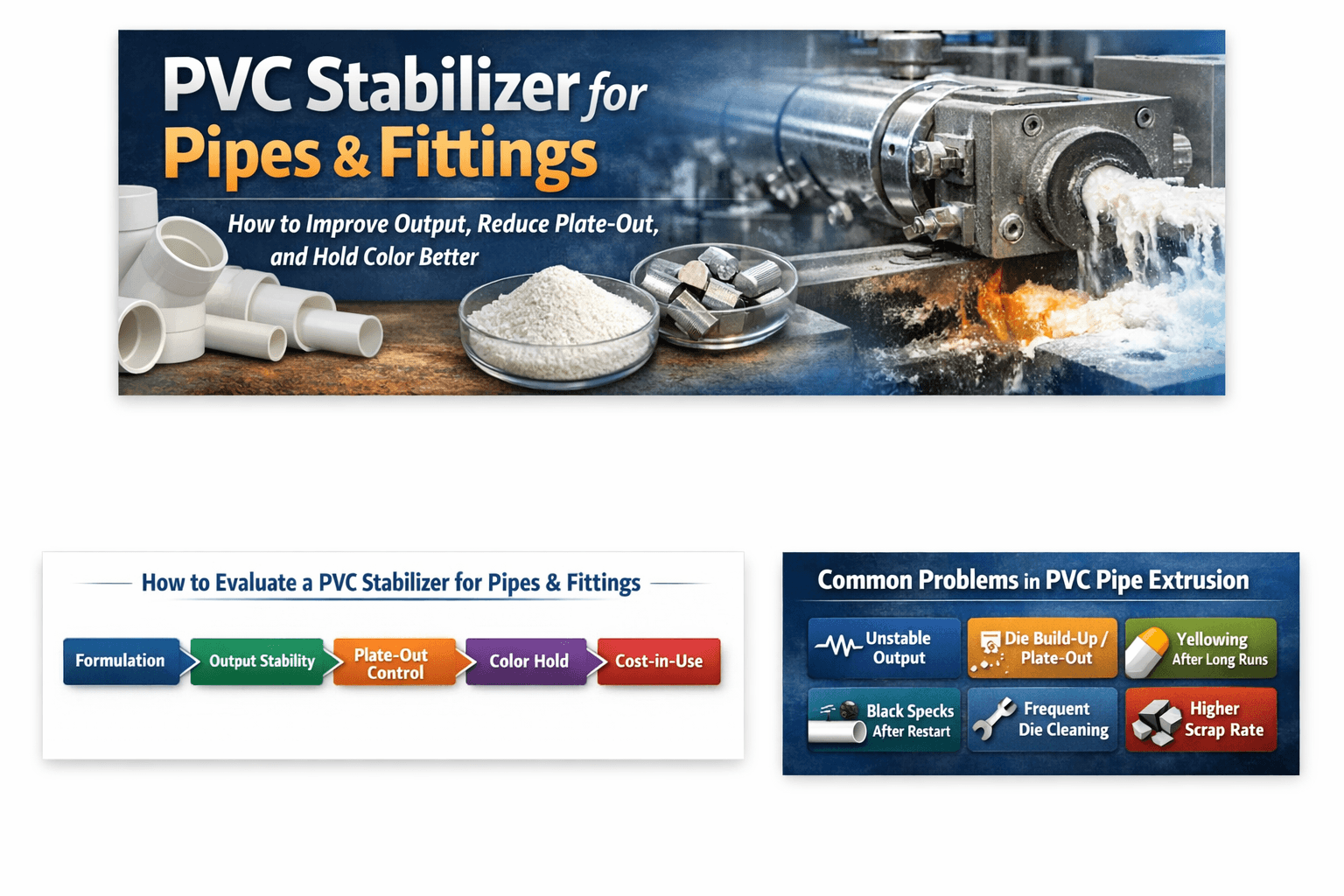
3.1 Warpage and edge curl
-
What happens:
Planks are not flat; edges lift after installation or after heat exposure (sunlight, near windows, under air-conditioning or hot rooms). -
Why it happens:
-
Uneven gelation and fusion of the PVC core
-
Unbalanced stabilizer–lubricant system
-
High internal stress caused by cooling and line settings
-
-
Why it matters:
Export customers and local distributors often have strict limits on dimensional change. Small warpage can lead to claims, extra sorting and heavy discounts.
3.2 Yellowing and colour drift
-
What happens:
Light designs turn slightly yellow, grey or dull either during extrusion or after storage. -
Root causes:
-
PVC degradation at high melt temperature
-
Long residence time in the extruder
-
Recycled PVC with impurities
-
Incompatible pigments or TiO₂ grades
-
-
Impact:
-
Difficult colour matching batch to batch
-
Higher scrap rate and re-work cost, especially on white and light grey tones
-
3.3 Plate-out and frequent die cleaning
-
What happens:
Build-up on die lips, rolls or embossing rollers; lines need to stop regularly for cleaning. -
Root causes:
-
Migration of stabilizer, lubricants or waxes
-
Moisture or low-purity fillers
-
Over-lubrication or incorrect lubricant type
-
-
Impact:
-
10–15% lower effective capacity
-
Unstable thickness and surface finish
-
3.4 Surface defects and scratch complaints
-
What happens:
Scratches, micro-cracks or gloss differences are visible after some time in service, especially in high-traffic commercial areas. -
Root causes:
-
Weak support from the core under the wear layer
-
Non-uniform core structure or voids
-
Poor adhesion between core and coating
-
-
Impact:
-
Complaints from owners and installers
-
Risk to brand reputation in local markets
-
4. How CaZn PVC stabilizers help SPC & LVT cores
A CaZn PVC stabilizer for SPC/LVT is designed as a complete package, not just a simple calcium/zinc salt. When properly selected, it can help address the issues above:
4.1 Thermal stability and colour hold
CaZn systems capture HCl released from PVC during heating and slow down chain degradation. The benefits are:
-
More stable colour during high-temperature extrusion
-
Lower yellowing index over time
-
Better tolerance when recycled PVC or off-grade resin is used in the blend
For manufacturers in hot and humid countries, where room and cooling water temperatures are often high, this extra safety margin is crucial.
4.2 Cleaner fusion and smoother processing
A well-balanced CaZn stabilizer + lubricant system helps the PVC core:
-
Reach optimum fusion at reasonable torque
-
Maintain a stable melt flow across the die
-
Reduce plate-out on dies and rolls
This leads to:
-
Longer cleaning intervals
-
More consistent thickness and embossing
-
Less start-up scrap
4.3 Stronger, more uniform core support
While scratch resistance is mainly linked to the wear layer, the core must provide solid support. A good SPC flooring stabilizer:
-
Promotes a dense PVC–filler network
-
Reduces micro-voids and local weak spots
-
Improves adhesion between the core and the upper layers
The result is better abrasion test data and fewer visible defects after real-life use.
5. Practical selection tips for Asian SPC & LVT manufacturers
If you are evaluating or switching to a CaZn PVC stabilizer for SPC and LVT flooring, consider the following steps:
5.1 Define your application window
Clarify:
-
Target markets: export vs domestic; which climates?
-
Product range: thickness, filler loading, recycled PVC content
-
Customer requirements:
-
Dimensional stability limits
-
Yellowing index / colour tolerance
-
Lock strength, abrasion resistance
-
5.2 Run lab and pilot-scale trials
-
Compare several SPC/LVT-specific CaZn stabilizer grades under the same base formulation.
-
Measure:
-
Dynamic stability and fusion behaviour (torque rheometer)
-
Colour change, Congo-red time, oven ageing
-
Plate-out tendency in small-scale extrusion
-
5.3 Optimise the lubricant system together with the stabilizer
-
Treat stabilizer and lubricants as one package.
-
Avoid excessive external lubrication which can cause plate-out and poor fusion.
-
Work with your stabilizer supplier to fine-tune internal/external lubricant balance.
5.4 Monitor the processing window on the line
-
Keep records of barrel and die temperatures, screw speed, output and melt pressure.
-
Correlate quality issues (warpage, colour drift, surface defects) with process data.
-
Use this data to adjust formulations and settings step by step.
6. How WANSYN supports SPC & LVT customers
WANSYN Industry is a PVC stabilizer manufacturer in China, focused on CaZn stabilizers and methyl tin stabilizers for PVC processors, as well as functional PET/PS/PP sheet solutions.
For SPC and LVT flooring producers in Southeast and South Asia we offer:
-
CaZn PVC stabilizers designed specifically for high-filler SPC cores and LVT back layers
-
Technical support for recycled PVC formulations under Asian climate conditions
-
Free check of your current formula (resin, filler, stabilizer, lubricant package)
-
Lab testing support: torque curves, Congo-red, oven ageing and plate-out evaluation
If you are facing warpage, yellowing or plate-out issues on your SPC or LVT lines and want to explore a lead-free CaZn PVC stabilizer solution, our team can help you evaluate options and optimise your formulation.
📩 Contact WANSYN Industry
Email: info@wxchemgroup.com
Mobile/WhatsApp: +86 159 5847 3100
Website: www.wxchemgroup.com