
How to Choose PVC Heat Stabilizers: Ca-Zn vs Methyl Tin (By Application)
Choosing the right PVC heat stabilizer is one of the fastest ways to reduce yellowing, burnt specks, plate-out, and scrap—while widening your processing window and protecting long-term performance.
This guide focuses on the two most common “modern” systems for global markets:
-
Calcium-Zinc (Ca-Zn) stabilizers (heavy-metal-free systems)
-
Methyl tin stabilizers (organotin, often the benchmark for rigid/clear PVC)
It’s written in a “selection-guide” format inspired by how SpecialChem structures practical decision content for processors.
Key takeaways
-
If your product must be crystal-clear (rigid clear sheet/film, clear profiles), methyl tin is usually the safest first choice due to its strong heat stability and clarity benefits commonly associated with organotin systems.
-
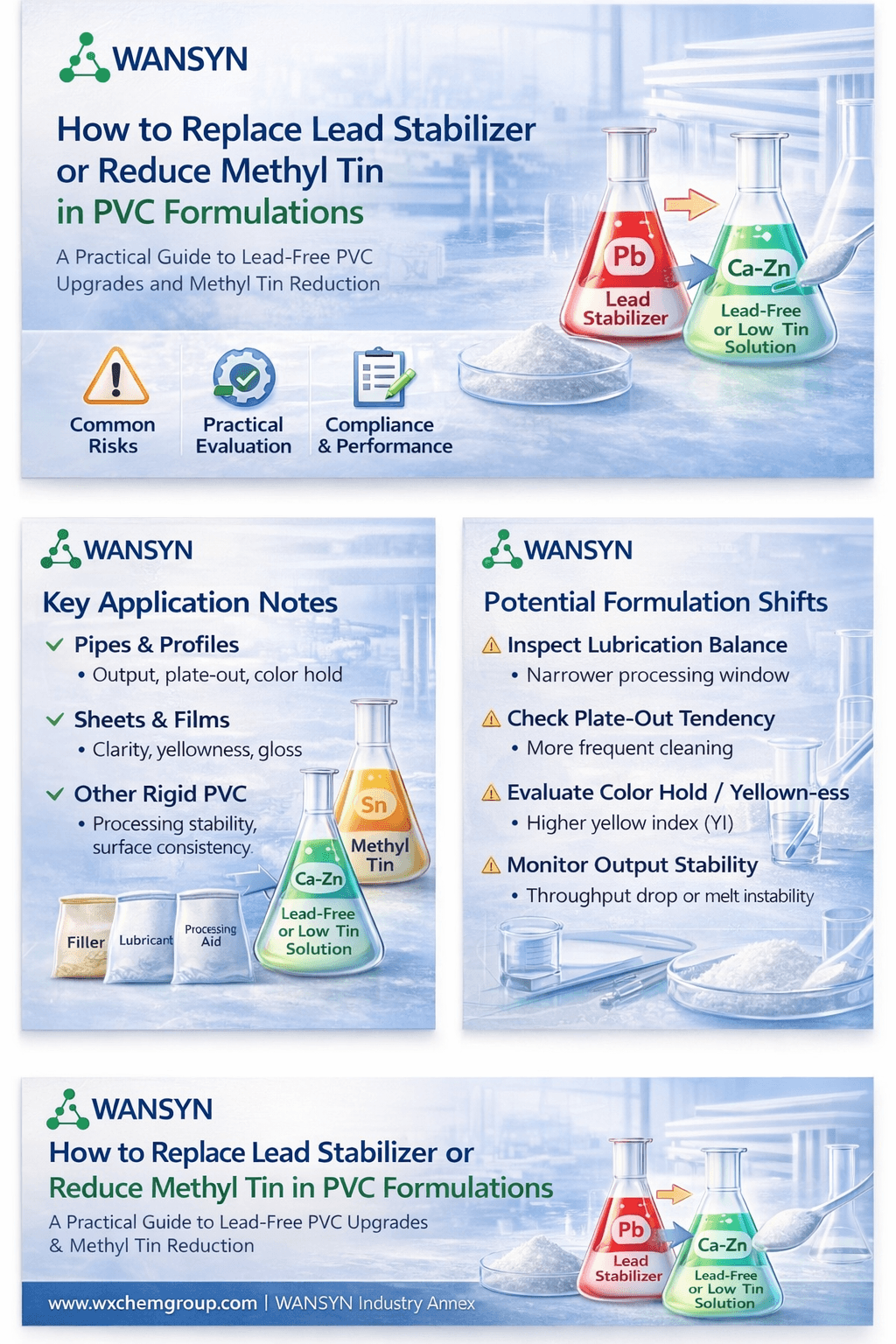
If you need a heavy-metal-free, more “eco-friendly positioned” system, Ca-Zn is the mainstream direction in many markets and applications.
-
For rigid PVC processing, organotin mercaptides may require more external lubrication than mixed-metal systems, so don’t choose stabilizer type in isolation—lubrication balance matters.
-
Application matters more than brand: pipe/profile/cable/flexible each stresses the formulation differently; pick by performance target + process + compliance.
-
The “best” stabilizer is the one that hits color + processing window + cost-in-use + compliance documentation for your exact line.
1) What PVC heat stabilizers actually do
PVC can dehydrochlorinate under heat and shear during processing, leading to discoloration (yellow/brown) and property loss. Heat stabilizers slow down these degradation reactions so you can process at practical temperatures and cycle times.
Historically, several systems existed (including lead-based), but many markets moved away due to toxicity concerns, driving broader adoption of organotin and heavy-metal-free systems like Ca-Zn.
2) Ca-Zn vs Methyl Tin: what’s different in practice?
Calcium-Zinc (Ca-Zn) stabilizers
Best known for: heavy-metal-free positioning, versatile use across many PVC applications when properly formulated.
What to watch: Ca-Zn performance depends heavily on the co-stabilizer package (e.g., phosphites, beta-diketones, antioxidants) and lubrication balance. Some grades are optimized for transparency, but “ultra-clear” rigid PVC is still commonly where tin dominates.
Methyl tin stabilizers
Best known for: strong heat stability, excellent color hold, and clarity benefits in rigid PVC—often used for clear sheet/film and transparent rigid products.
What to watch: lubrication and melt rheology. SpecialChem notes tin mercaptide stabilizers can contribute to lower melt viscosity and are “essentially non-lubricating,” meaning more external lubricant may be needed versus mixed-metal systems in rigid PVC.
3) The selection framework (use this before you compare quotes)
When selecting a stabilizer system, lock these 6 inputs first:
-
PVC type & target appearance
-
rigid vs plasticized, clear vs opaque, glossy vs matte
-
Process & line conditions
-
extrusion / calendering / injection molding; output rate; melt temperature; screw design
-
Performance target
-
initial color, long-term stability, weathering, electrical, odor/VOC perception, plate-out control
-
Additive package constraints
-
impact modifier, filler loading, pigments (especially TiO₂), internal/external lubes, processing aids
-
Compliance & customer requirements
-
region regulations, RoHS/REACH/SVHC expectations (and what documents buyers ask you to provide)
-
Cost-in-use (not just $/kg)
-
dosage window, scrap rate, downtime, die cleaning frequency, consistency batch-to-batch
4) Best choice by application (the part most people actually need)
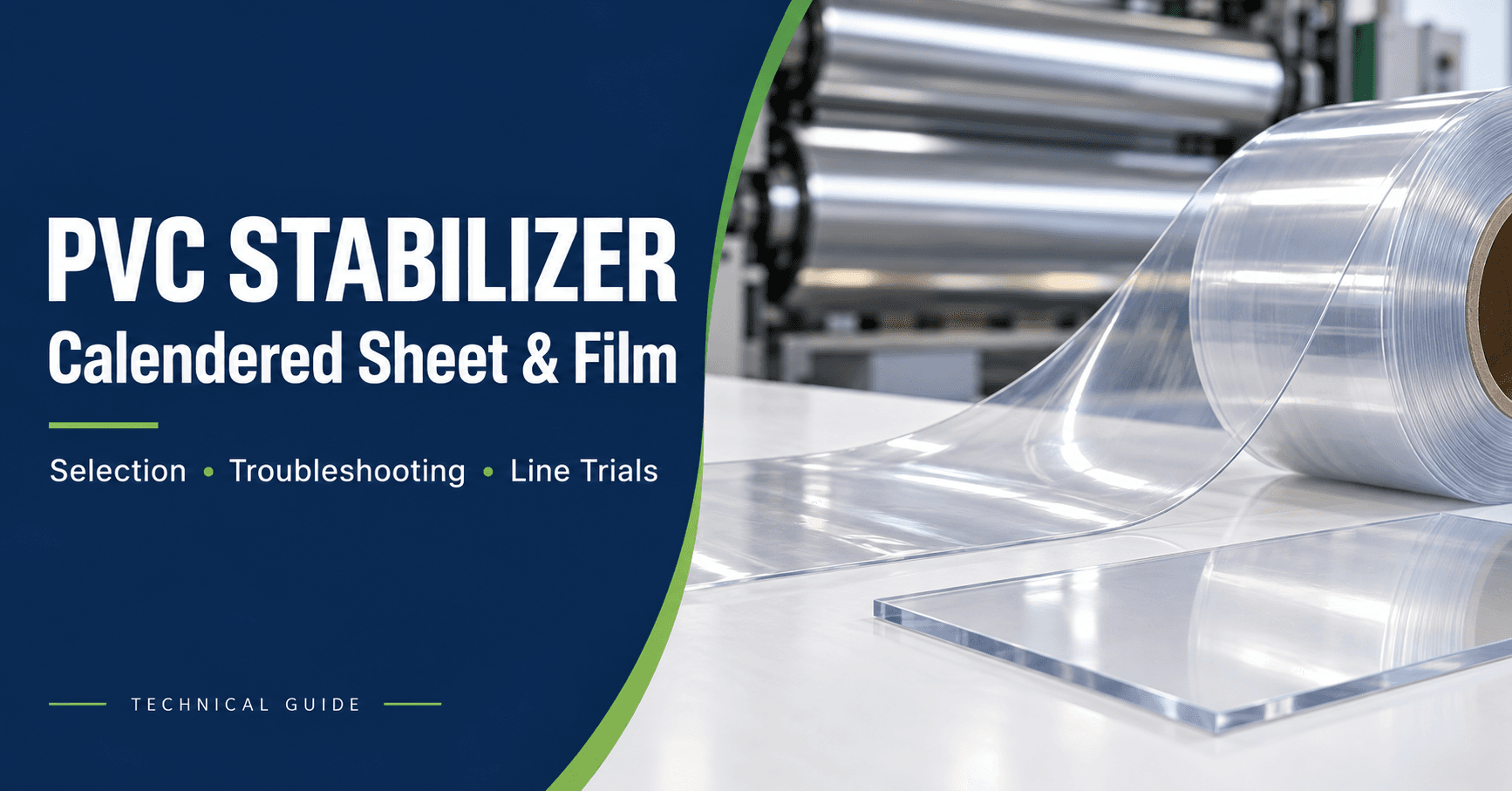
A) Clear rigid PVC sheet/film (calendering or extrusion)
Typical priority: maximum transparency + low yellowness + stable processing
Common best-fit: Methyl tin
-
Often preferred where clarity is non-negotiable and where strong heat stability is needed for rigid processing.
Design notes:
-
Balance external lubrication carefully (tin systems may need it).
-
Define your target haze/yellowness and run controlled thermal history trials (long residence is where weak packages show).
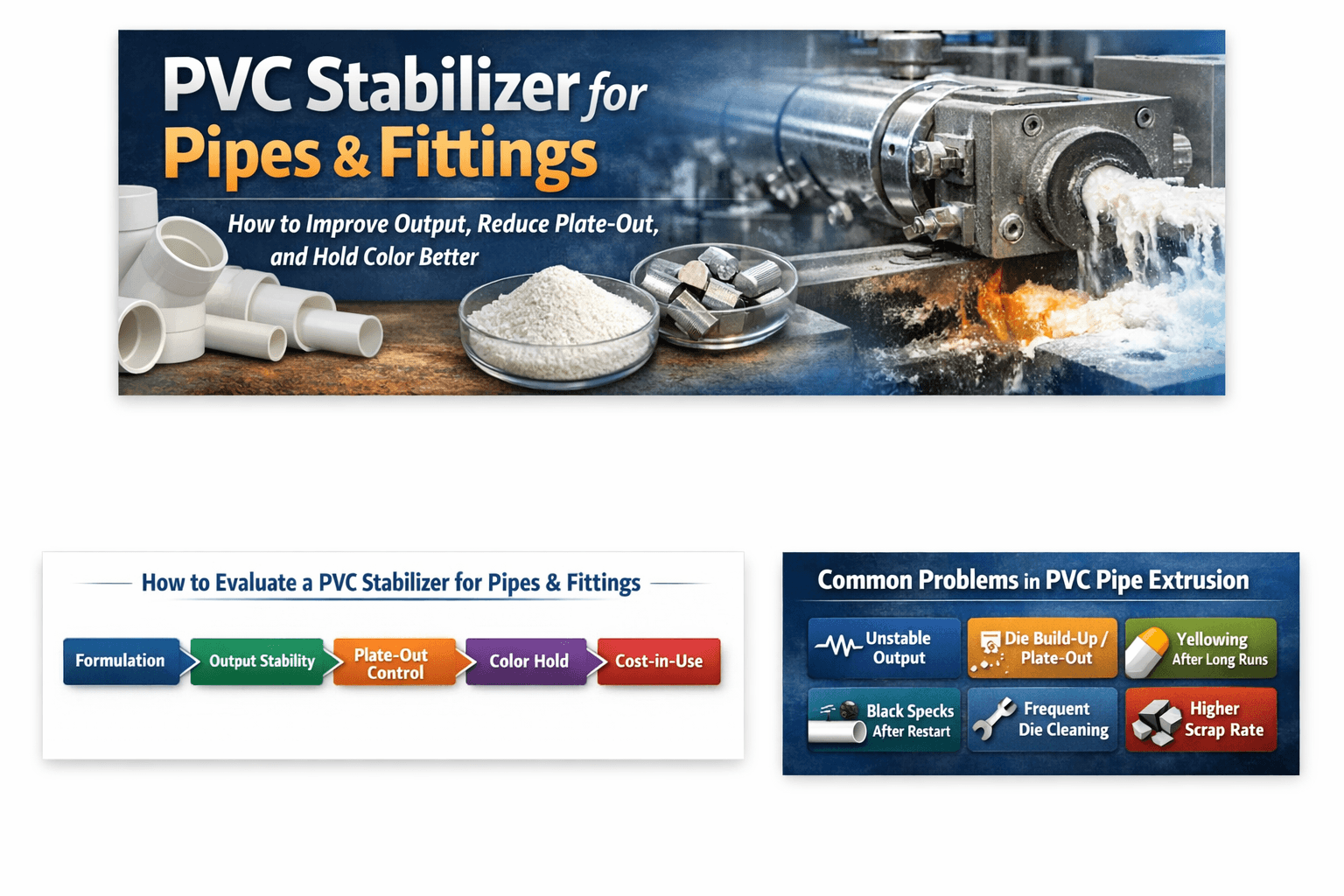
B) uPVC pipes & fittings
Typical priority: processing window + mechanical properties + long-term stability + cost-in-use
Common best-fit: Ca-based systems (including Ca-Zn) are widely used across many pipe and fitting categories.
When methyl tin makes sense:
-
Specialty rigid pipe/fitting cases where extra color hold or stability is required, but many producers optimize cost-in-use with Ca-based systems.
Design notes:
-
Pipe is unforgiving: aim for stability that survives start/stop, regrind, and seasonal temperature shifts.
C) Rigid profiles (window/technical profiles, including foam profiles)
Typical priority: surface quality + color hold + weathering + stable extrusion
Common best-fit: often Ca-based systems (including Ca-Zn) in many profile applications.
When methyl tin makes sense:
-
High-gloss, premium appearance targets or transparent/semi-transparent profile needs.
D) Wire & cable (PVC compounds)
Typical priority: electrical properties + heat stability + processing + low odor perception (often)
Common best-fit: Ca-based (including Ca-Zn) is widely used in wire & cable applications.
E) Flexible / semi-rigid PVC (films, flooring layers, compounds)
Typical priority: processing + compatibility with plasticizers + color hold + emissions perception
Common best-fit: Ca-Zn is a common heavy-metal-free choice in many flexible/semi-rigid uses, depending on how the package is built.
5) A practical decision matrix (copy/paste for internal use)
| Application | Typical “first choice” | Why | Watch-outs |
|---|---|---|---|
| Clear rigid sheet/film | Methyl tin | Clarity + strong heat stability reputation in rigid PVC | Lubrication balance; plate-out vs lubricants |
| uPVC pipe & fittings | Ca-Zn / Ca-based | Widely used across pipe categories | Long-term stability + start/stop stability |
| Rigid profiles | Ca-Zn / Ca-based | Common in profiles and technical extrusion | Weathering package & pigment interactions |
| Wire & cable | Ca-Zn / Ca-based | Common in W&C use | Electrical + plasticizer compatibility |
| Flexible PVC film/compound | Ca-Zn | Heavy-metal-free direction in many markets | Clarity level depends on package; odor/VOC perception |
6) How to validate your choice fast (without wasting weeks)
Step 1 — Define pass/fail metrics
-
Initial color (Lab* or yellowness index), clarity/haze (if relevant)
-
Torque/pressure stability, output rate, melt temperature window
-
Plate-out tendency (die cleaning interval)
-
Scrap rate (especially during line start/stop)
Step 2 — Run “thermal history stress” trials
-
Don’t just test normal production. Add a high-shear / longer residence condition to expose weakness early.
Step 3 — Confirm lubrication balance
-
Especially critical when switching stabilizer families. SpecialChem highlights differences in viscosity and lubrication behavior for tin mercaptides vs mixed-metal systems.
Step 4 — Collect compliance documents once, reuse everywhere
-
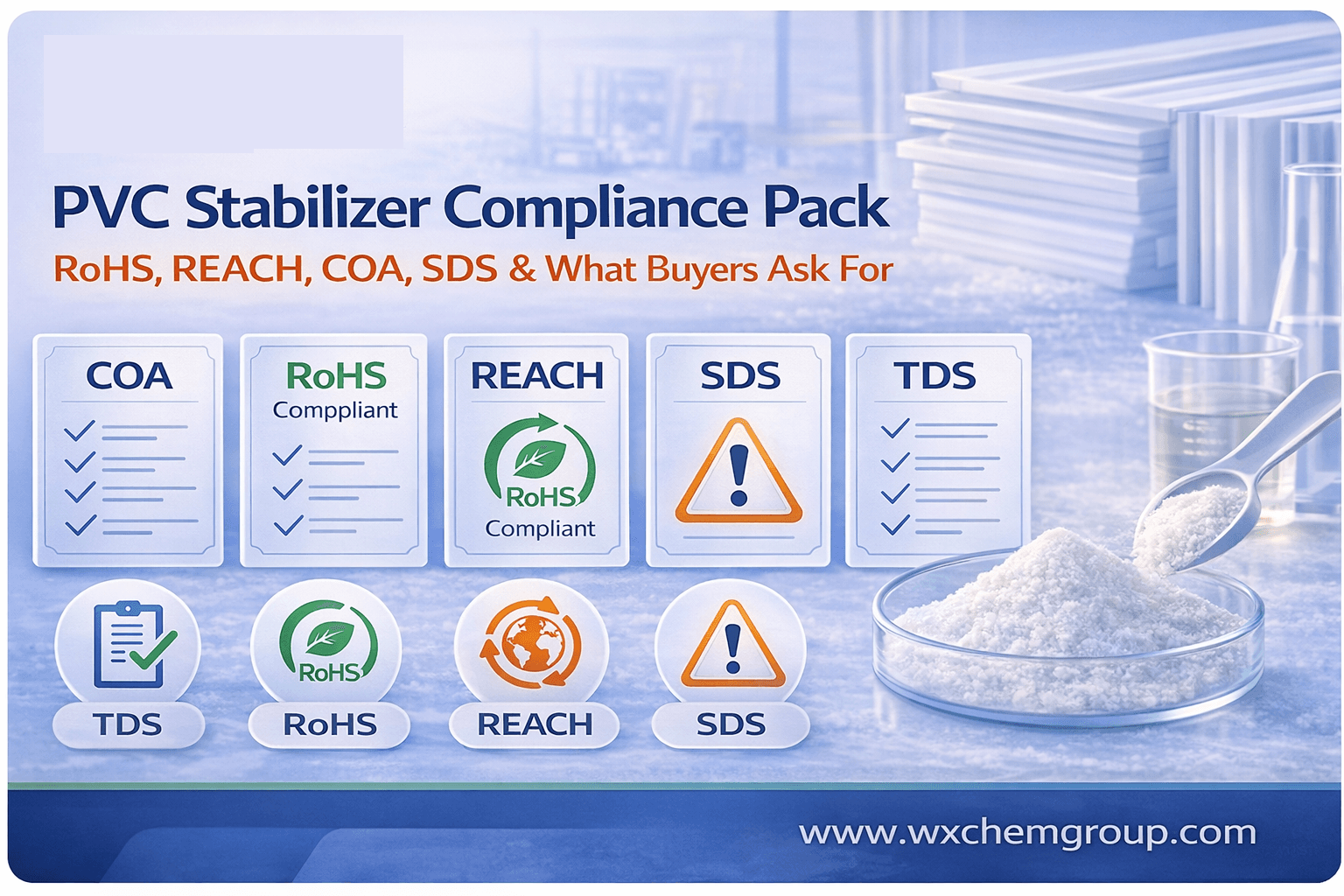
Build a standard package: TDS + SDS + regulatory statements your buyers ask most often.
7) Common mistakes (and how to avoid them)
-
Choosing by $/kg only
Cheaper stabilizer can shrink your processing window and increase downtime—cost-in-use rises quickly. -
Changing stabilizer type without rebalancing lube/processing aids
Tin vs Ca-Zn packages can behave differently in lubrication needs. -
Skipping pigment interaction checks
TiO₂ grade, carbon black, and optical brighteners can shift color hold and stability needs. -
Under-testing start/stop conditions
Many complaints come from real-life instability, not steady-state runs.
FAQ
Q1: Which stabilizer is better for transparency?
For rigid, high-clarity PVC, methyl tin systems are widely associated with strong transparency and heat stability performance.
Q2: Is Ca-Zn always “eco-friendly” compared with tin?
Ca-Zn is often positioned as heavy-metal-free and is a mainstream option in that direction. “Better” depends on your market requirements and customer specs.
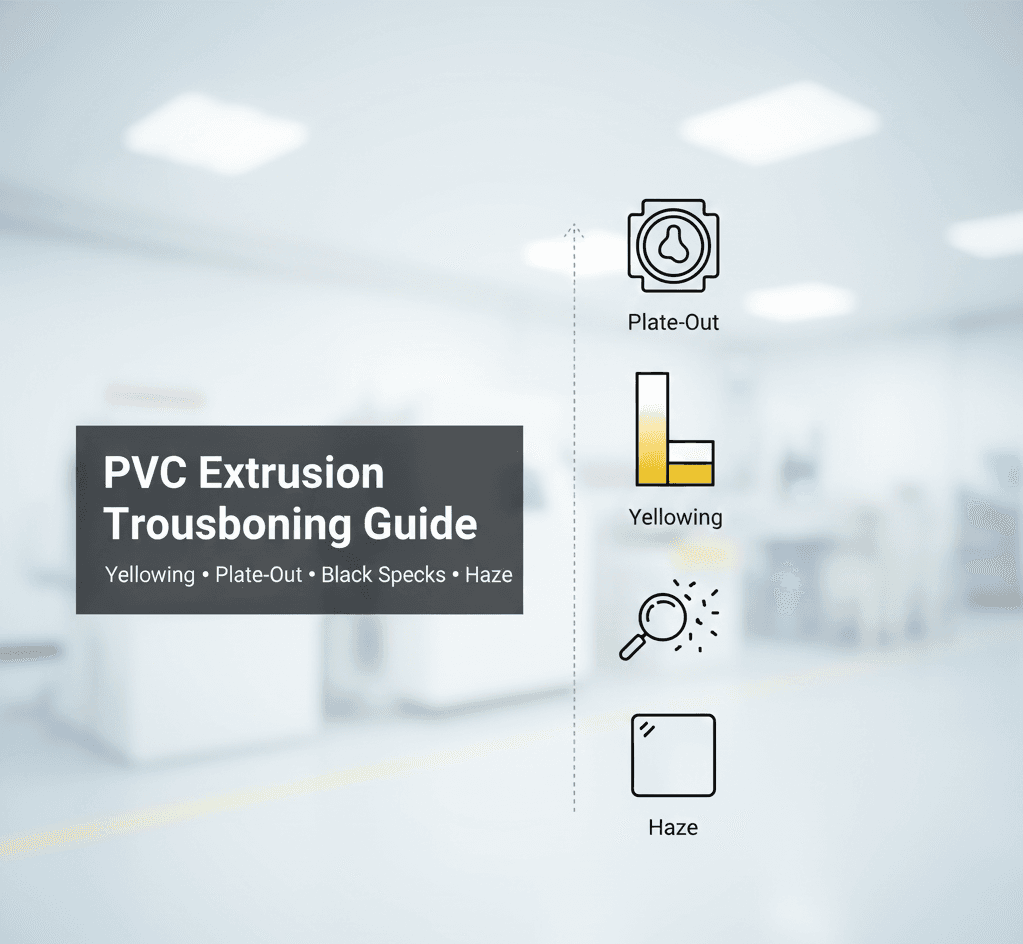
Q3: Why did my clear sheet start yellowing after switching stabilizers?
Common causes include lubrication imbalance, longer residence time at the die, or insufficient co-stabilizer package for your thermal history.
Q4: Can I use one stabilizer grade for everything?
Usually no. Pipes, profiles, and clear sheets have different stress profiles—selection by application is the fastest route to stable production.
Q5: Do I need more lubricant with methyl tin?
In rigid PVC, organotin mercaptides are described as essentially non-lubricating and may require more external lubricant than mixed-metal or lead types.
Q6: How do I compare suppliers fairly?
Use the same formulation base, same line conditions, and compare output + stability window + cleaning interval + scrap (not only color).