
Enhance PVC Durability with Liquid Ca-Zn Stabilizer
PVC durability isn’t only about the final product—it’s largely determined during processing. When heat, shear, and oxygen act on PVC, they can trigger degradation that leads to yellowing, brittleness, odor, plate-out, or unstable processing.
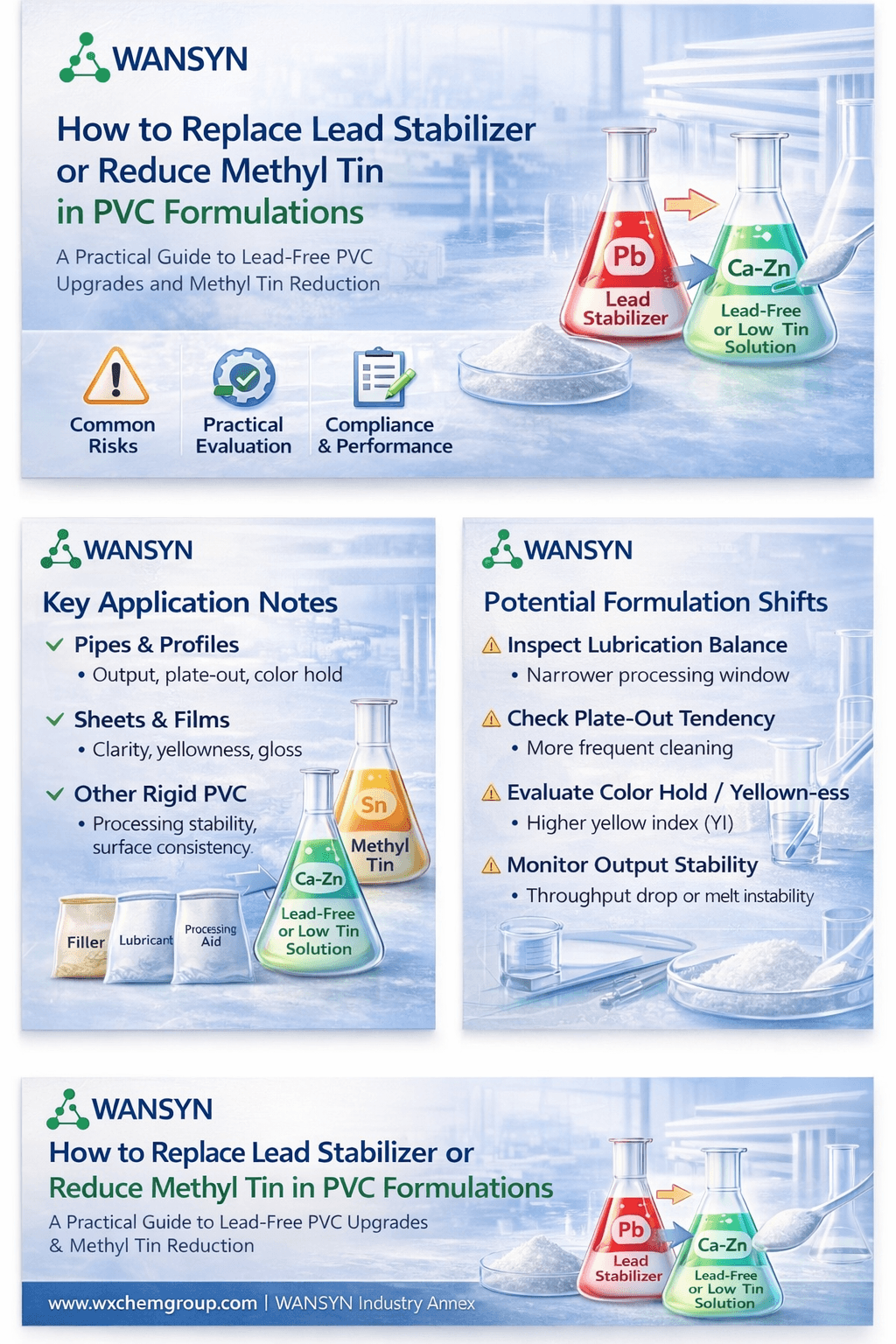
Liquid Calcium-Zinc (Ca-Zn) stabilizers are a modern, lead-free approach to improve processing stability and long-term performance—especially for semi-rigid and flexible PVC, and for markets where environmental preference and compliance are important.
Key Takeaways
-
Liquid Ca-Zn stabilizer improves PVC processing stability and helps reduce yellowing and brittleness.
-
Best suited for flexible & semi-rigid PVC (e.g., cable, hose, films, coated fabrics, profiles depending on formulation).
-
Liquid systems often provide better dispersion and more consistent performance than poorly dispersed additives.
-
Different markets & applications use different systems:
Clear rigid PVC often uses Methyl Tin (MT); semi-rigid/flexible and eco-preferred scenarios often use Ca-Zn. -
Synergy is possible: Ca-Zn can be combined with boosters/co-stabilizers to meet demanding processing targets.
Why PVC Degrades During Processing
PVC can degrade when exposed to high temperature and shear during extrusion, calendaring, injection molding, or compounding. Typical signs include:
-
Color shift / yellowing (loss of clarity or whiteness)
-
Brittleness and reduced impact strength
-
Unstable processing (torque fluctuation, poor fusion, inconsistent melt behavior)
-
Surface defects / plate-out (deposits that affect appearance and efficiency)
A stabilizer system works by slowing degradation reactions and maintaining stable processing conditions—helping you keep both productivity and final-product quality.
What Is Liquid Ca-Zn Stabilizer
A liquid calcium-zinc stabilizer is a lead-free stabilizer system designed to protect PVC during processing and help maintain properties over time. Compared with some solid systems, liquid formats can provide:
-
Faster and more uniform dispersion
-
More consistent performance batch-to-batch
-
Cleaner processing and improved handling (depending on your plant setup and formulation)
In practical terms, better dispersion can mean more stable production, fewer defects, and more predictable product quality.
Where Liquid Ca-Zn Works Best
Liquid Ca-Zn stabilizers are commonly chosen for semi-rigid and flexible PVC applications, such as:
-
Flexible compounds (general flexible PVC formulations)
-
Cables and wires (compound stability + processing control)
-
Hoses and tubing
-
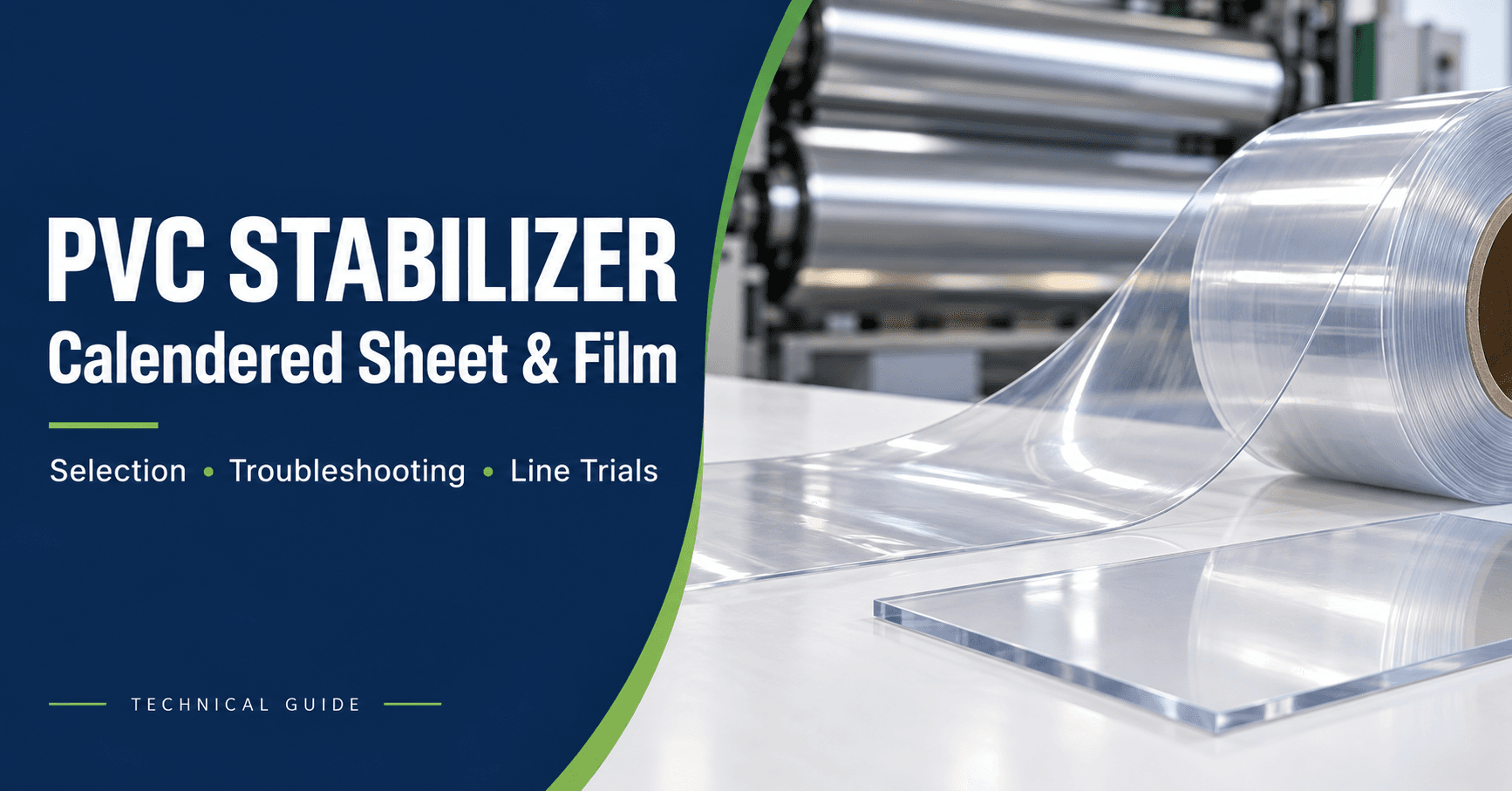
Soft films and sheets (depending on clarity/targets)
-
Coated fabrics, flooring layers, and other flexible PVC products
Note: Final performance depends on the full formulation (PVC resin type, plasticizer, lubricants, fillers, pigments, processing conditions). A matched stabilizer package is key.
Benefits You Can Expect (Formulation-Dependent)
When correctly matched, liquid Ca-Zn stabilizer systems can help you:
-
Improve heat stability during extrusion/calendering/compounding
-
Reduce yellowing and maintain more consistent appearance
-
Support better processing stability (torque, fusion window)
-
Lower risk of plate-out or surface defects (with a balanced lubricant system)
-
Meet lead-free / eco-preferred requirements in many markets
Typical Dosage and Practical Tips
Dosage varies by application and formulation. Instead of a one-size-fits-all number, a practical approach is:
-
Start from your current stabilizer package baseline
-
Define your target: clarity, initial color, long-term aging, processing window, plate-out control
-
Adjust stabilizer + lubricant balance together
Tip: For many plants, the biggest gains come from optimizing the whole system (stabilizer + lubricants + processing aids), not just increasing stabilizer dosage.
If you share your application and process (extrusion/calendering/injection), we can recommend a starting formulation and testing plan.
Liquid Ca-Zn vs. Liquid Methyl Tin (MT): How to Choose
Different markets and applications choose different systems:
When Methyl Tin (MT) Is Often Chosen
-
Clear rigid PVC where high transparency and strong heat stability are critical
(e.g., clear rigid sheet/film, rigid transparent products—depending on regulations and customer specs)
When Liquid Ca-Zn Is Often Chosen
-
Semi-rigid and flexible PVC
-
Markets/products prioritizing lead-free and eco-preferred solutions
-
Applications where processing stability + compliance + balanced cost/performance are key
Synergy / Co-Stabilization Is Possible
In some formulations, Ca-Zn systems can be combined with co-stabilizers/boosters to reach demanding processing or color targets while maintaining a compliance-friendly positioning.
Best practice: Choose based on application, required clarity, processing window, and market compliance expectations—not only on price.
What We Can Provide
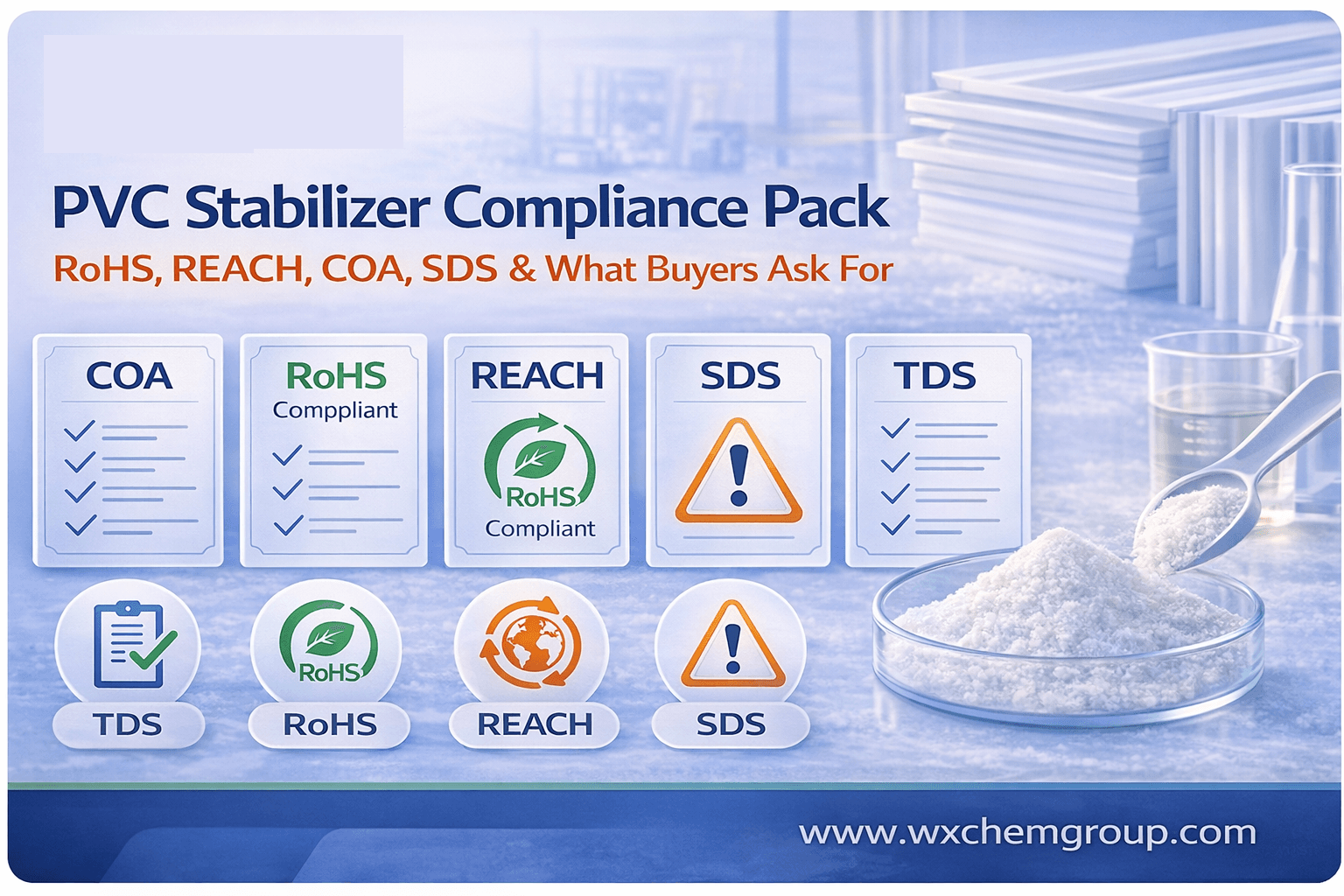
To support qualification and audits, we can provide typical documentation such as:
-
SDS and basic product documentation
-
Compliance-related third-party reports where available (e.g., SVHC screening / RoHS-related support depending on grade)
-
Technical guidance for switching stabilizer systems (lead → Ca-Zn, or optimizing liquid packages)
Ready to Improve Your PVC Durability?
Tell us your application (rigid clear vs semi-rigid vs flexible), process (extrusion/calendering/injection), and key issues (yellowing, plate-out, odor, torque). We’ll recommend a stabilizer approach and a practical test plan.
CTA: Request a recommended grade + sample + formulation guidance.
FAQ
1) What is a liquid Ca-Zn stabilizer used for?
Liquid Ca-Zn stabilizers are used to improve heat stability and processing consistency in PVC, especially in semi-rigid and flexible applications.
2) Is liquid Ca-Zn suitable for transparent rigid PVC?
It can work in some cases, but clear rigid PVC often uses Methyl Tin (MT) when the highest transparency and heat stability are required. Selection depends on clarity targets and market requirements.
3) How does liquid format help compared with solid stabilizers?
Liquid systems can offer more uniform dispersion and more consistent processing, which may reduce defects and improve stability (depending on your setup and formulation).
4) How do I choose between liquid Ca-Zn and liquid Methyl Tin?
Use MT more often for clear rigid PVC; use Ca-Zn more often for semi-rigid/flexible PVC and eco-preferred scenarios. There are also synergy/combined packages for demanding targets.
5) Can liquid Ca-Zn help reduce yellowing and brittleness?
In many formulations, yes—by improving heat stability and reducing degradation during processing. Results depend on the full formulation and processing conditions.
6) Will changing stabilizers affect plate-out or surface quality?
It can. Plate-out is strongly affected by the stabilizer + lubricant balance. A matched system and trials are recommended.
7) What information do you need to recommend a stabilizer grade?
Application, process method, resin K-value (if known), plasticizer type, fillers/pigments, current stabilizer system, and the exact problem you’re solving (yellowing, torque, odor, plate-out).
8) Do you support trials and formulation guidance?
Yes. We can suggest a starting formulation direction and a test plan to confirm performance on your line.
Related resources: Liquid Ca-Zn PVC stabilizer | Ca-Zn vs methyl tin selection guide.
For grade selection, send your application, resin, plasticizer, processing method and current issue through Contact WANSYN.