
Thermoforming Sheet Roll RFQ Checklist: What Buyers Should Confirm Before Requesting a Quote
When sourcing thermoforming sheet rolls for food trays, blister packs, printed trays, high-barrier packs, or easy-peel applications, many projects slow down at the quotation stage for one simple reason: the RFQ is incomplete.
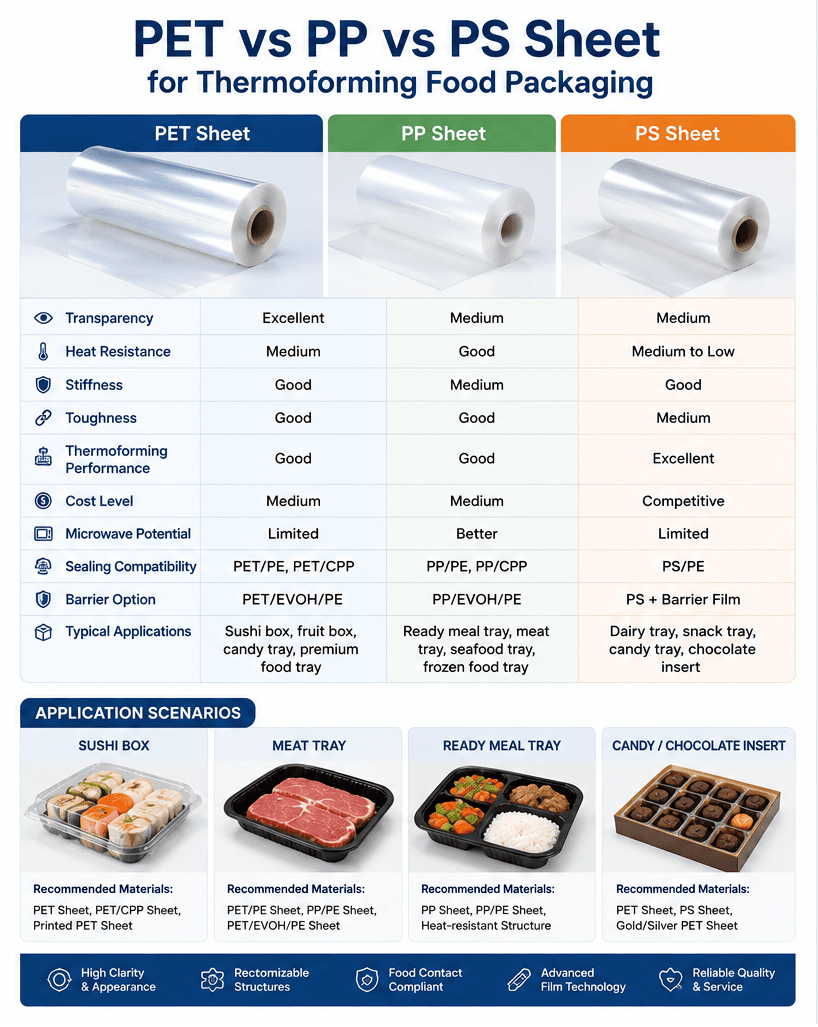
For PET, PP, PS, and functional laminated structures such as PET/PE, PP/PE, PS/PE, PET/CPP, PP/CPP, or high-barrier options like PET/EVOH/PE, quotation accuracy depends heavily on the information provided by the buyer. If key specifications are missing, suppliers may quote the wrong structure, prepare unsuitable samples, or recommend materials that do not match the buyer’s forming line, sealing process, or target packaging performance.
A clear thermoforming sheet roll RFQ checklist helps buyers and suppliers align earlier, reduce unnecessary sampling rounds, and move from quotation to line trial more efficiently.
Introduction Summary
This guide explains what buyers should include in a thermoforming sheet roll RFQ, which details are most often overlooked, and how those missing items can affect quotation accuracy, sample preparation, machine compatibility, sealing performance, barrier design, and scale-up efficiency.
Whether you are sourcing PET / PP / PS thermoforming sheet rolls, laminated sealing structures, printed sheet rolls, or high-barrier packaging materials, a more complete RFQ can save time, reduce risk, and improve project execution.
Key Takeaways
-
A complete RFQ improves quotation accuracy, sample efficiency, and line compatibility.
-
Buyers should clarify whether the sheet is single-layer or laminated / functional.
-
Roll specifications such as core ID, max OD, winding direction, and roll weight are critical for production trials.
-
Sealing and barrier requirements should be defined early for tray packaging projects.
-
Printing, surface performance, and compliance documents should not be treated as secondary details.
What Is a Thermoforming Sheet Roll RFQ Checklist?
A thermoforming sheet roll RFQ checklist is a structured list of specifications a buyer should confirm before requesting a quote for sheet rolls.
Its purpose is not limited to pricing. A good RFQ also helps improve:
-
structure recommendation
-
sample preparation
-
machine compatibility
-
forming consistency
-
sealing performance
-
barrier design
-
development speed from trial to production
In other words, an RFQ is not just a purchasing form. It is a project alignment tool between buyer and supplier.
This is especially important for:
-
food thermoforming sheet rolls
-
laminated tray-sealing sheet rolls
-
printed thermoforming rolls
-
gold metallized sheet rolls
-
easy-peel tray applications
-
anti-fog refrigerated trays
-
MAP high-barrier packaging structures
Why Many Thermoforming Sheet RFQs Are Inefficient
In many inquiries, buyers only provide a few basic details, such as:
-
material: PET / PP / PS
-
thickness: 300 microns
-
width: 500 mm
-
application: food tray
This is a useful starting point, but in real packaging projects it is usually not enough.
A supplier still needs to understand:
-
whether the sheet is single-layer or laminated
-
whether a sealing layer is required
-
whether the application needs barrier performance
-
whether the roll must run on a specific thermoforming or tray-sealing line
-
whether printing, anti-fog, anti-scratch, or easy-peel features are required
-
whether the buyer has limits on roll diameter, roll weight, or core size
Without that information, several problems can occur.
1) Inaccurate Quotation
A standard transparent PET sheet, a printed PET roll, a PET/PE laminated roll, and a PET/EVOH/PE high-barrier structure may all be loosely described as “thermoforming sheet,” but their structure design and cost are very different.
2) Wrong Sample Direction
A buyer may actually need a sealable laminated structure, while the supplier prepares a non-sealable sheet simply because the sealing requirement was never specified.
3) Trial Failure on the Line
Sometimes a sheet does not fail because the material is wrong, but because the roll specification does not match the machine.
Typical examples include:
-
roll OD too large for the unwind system
-
core ID incompatible with the machine shaft
-
winding direction unsuitable for printing or sealing trials
-
thickness tolerance outside the forming window
-
surface orientation reversed
Single-Layer Sheet vs Laminated Sheet: Clarify This Early
One of the most common causes of confusion is that buyers ask for a “thermoforming sheet roll” without clearly stating whether they need a single-layer sheet or a functional laminated structure.
Single-Layer Sheet
Single-layer PET, PP, or PS sheet is more commonly used when the main focus is:
-
formability
-
appearance
-
rigidity
-
transparency or color
-
general tray or blister applications
Laminated or Functional Structure
Laminated or co-extruded structures are more suitable when the application also requires:
-
heat sealing
-
easy-peel opening
-
anti-fog performance
-
barrier properties
-
cold-chain durability
-
print protection
-
premium retail presentation
Typical examples include:
-
PET/PE
-
PP/PE
-
PS/PE
-
PET/CPP
-
PP/CPP
-
PET/EVOH/PE
-
PP/EVOH/PE
If the buyer clarifies this at the RFQ stage, the supplier can respond much faster with a more relevant structure proposal.
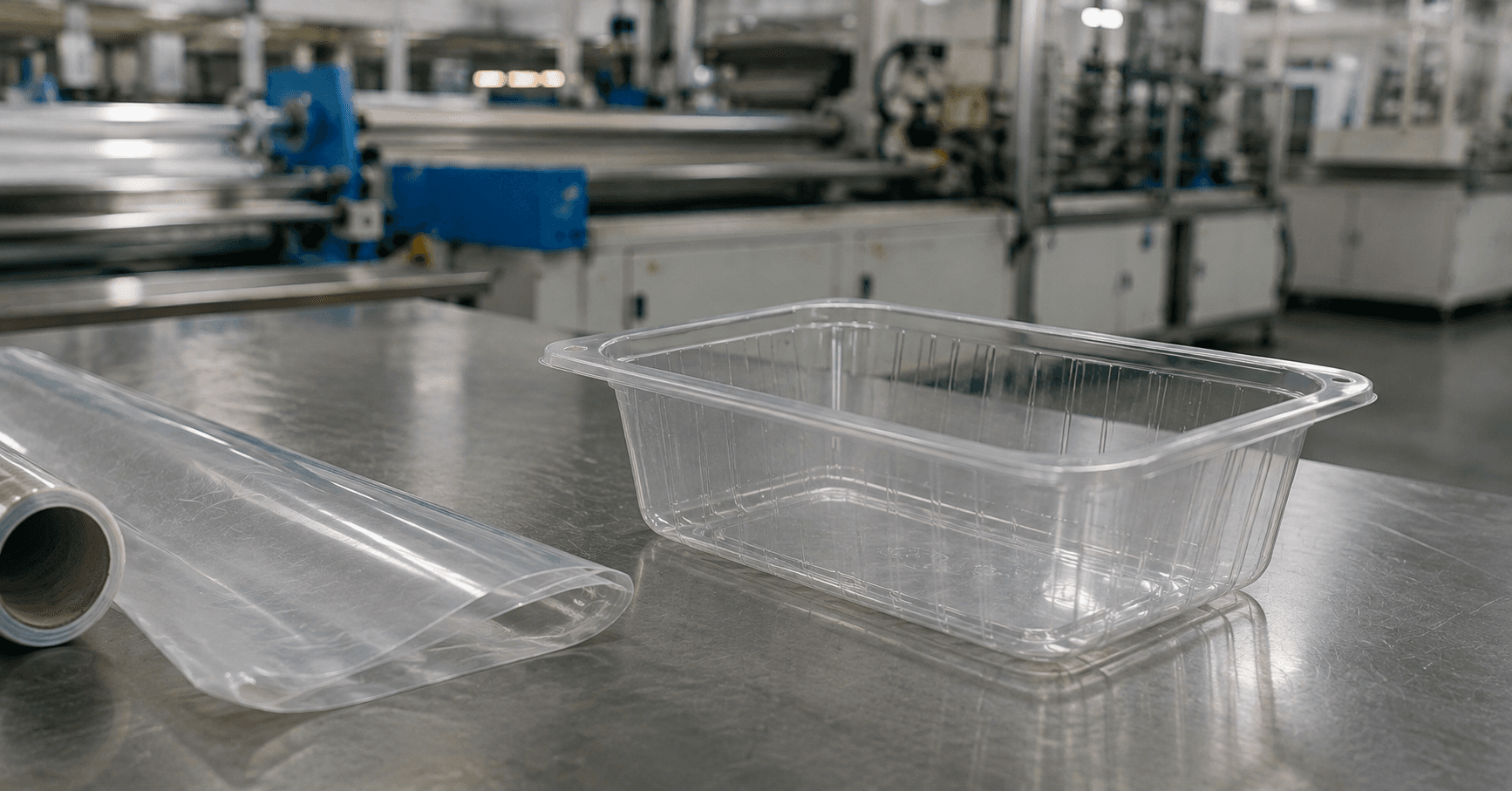
laminated thermoforming sheet structures
The 10 Most Important Items in a Thermoforming Sheet Roll RFQ
1. Material and Structure
State the material clearly, such as:
-
PET
-
PP
-
PS
-
PET/PE
-
PP/PE
-
PS/PE
-
PET/CPP
-
PP/CPP
-
PET/EVOH/PE
-
PP/EVOH/PE
Avoid vague wording like plastic sheet roll whenever possible.
Better product descriptions include:
-
transparent PET thermoforming sheet
-
PP laminated sealing sheet for trays
-
PS/PE laminated sheet for food packaging
-
PET/EVOH/PE high-barrier thermoforming sheet roll
2. End Use and Final Pack Format
The final application affects material design more than many buyers expect.
For example, sushi trays, MAP meat trays, chocolate trays, cheese stick packs, dessert trays, frozen seafood trays, and industrial blister inserts all have different priorities.
Buyers should ideally clarify:
-
what product will be packed
-
whether the sheet will be in direct food contact
-
whether the pack is refrigerated, frozen, or ambient
-
whether it must be sealed with lidding film
-
whether retail appearance is important
3. Thickness and Tolerance
Thickness is one of the most basic specifications, but many RFQs still omit the tolerance.
A better format is:
-
Thickness: 350 microns
-
Tolerance: ±3% or ±5%
-
Trial range: 300–400 microns if still under development
Thickness affects not only cost, but also:
-
forming depth
-
tray rigidity
-
appearance
-
stackability
-
compressive resistance
-
sealing consistency
4. Width, Roll Length, and Roll Weight
These parameters directly affect machine loading, mold layout efficiency, logistics, and operator handling.
Buyers should specify:
-
sheet width
-
roll length
-
net roll weight
-
gross roll weight if relevant
-
whether there is a maximum roll weight limit on site
5. Core ID, Maximum Roll OD, and Winding Direction
This is one of the most overlooked but most practical parts of the RFQ.
Buyers should confirm:
-
core ID, such as 3 inch or 6 inch
-
maximum roll outside diameter
-
winding direction
-
whether the sealing layer or print side should face inward or outward
-
whether roll joints / splices are allowed
In real production, a sheet roll that looks correct on paper may still fail to run if the mechanical roll parameters do not match the machine.
6. Surface Requirement
Surface properties are often more important than buyers initially realize.
Possible requirements include:
-
high gloss
-
matte finish
-
one side gloss / one side matte
-
corona treatment
-
printability
-
anti-scratch performance
-
anti-static
-
anti-fog
For printed applications, surface requirements should be discussed even more carefully, especially if trays will be stacked, transported, or displayed at retail.
7. Sealing Requirement and Seal Layer
If the application involves tray sealing, lidding film, or easy-peel opening, this must be stated clearly.
Typical structures include:
-
PET/PE
-
PP/PE
-
PS/PE
-
PET/CPP
-
PP/CPP
Buyers should specify:
-
whether heat sealing is required
-
what lidding film will be used
-
whether easy-peel performance is required
-
whether seal integrity is critical
-
whether the application is intended for MAP
In many real packaging projects, seal integrity matters as much as barrier performance.
8. Barrier Requirement
For meat, seafood, sushi, cheese, prepared foods, and some cold-chain applications, simply saying need barrier is not enough.
A better RFQ should include:
-
OTR target
-
WVTR target
-
test conditions
-
shelf-life goal
-
whether EVOH is required
-
whether oxygen barrier or moisture barrier is the main priority
This allows suppliers to recommend a more suitable structure instead of making assumptions.
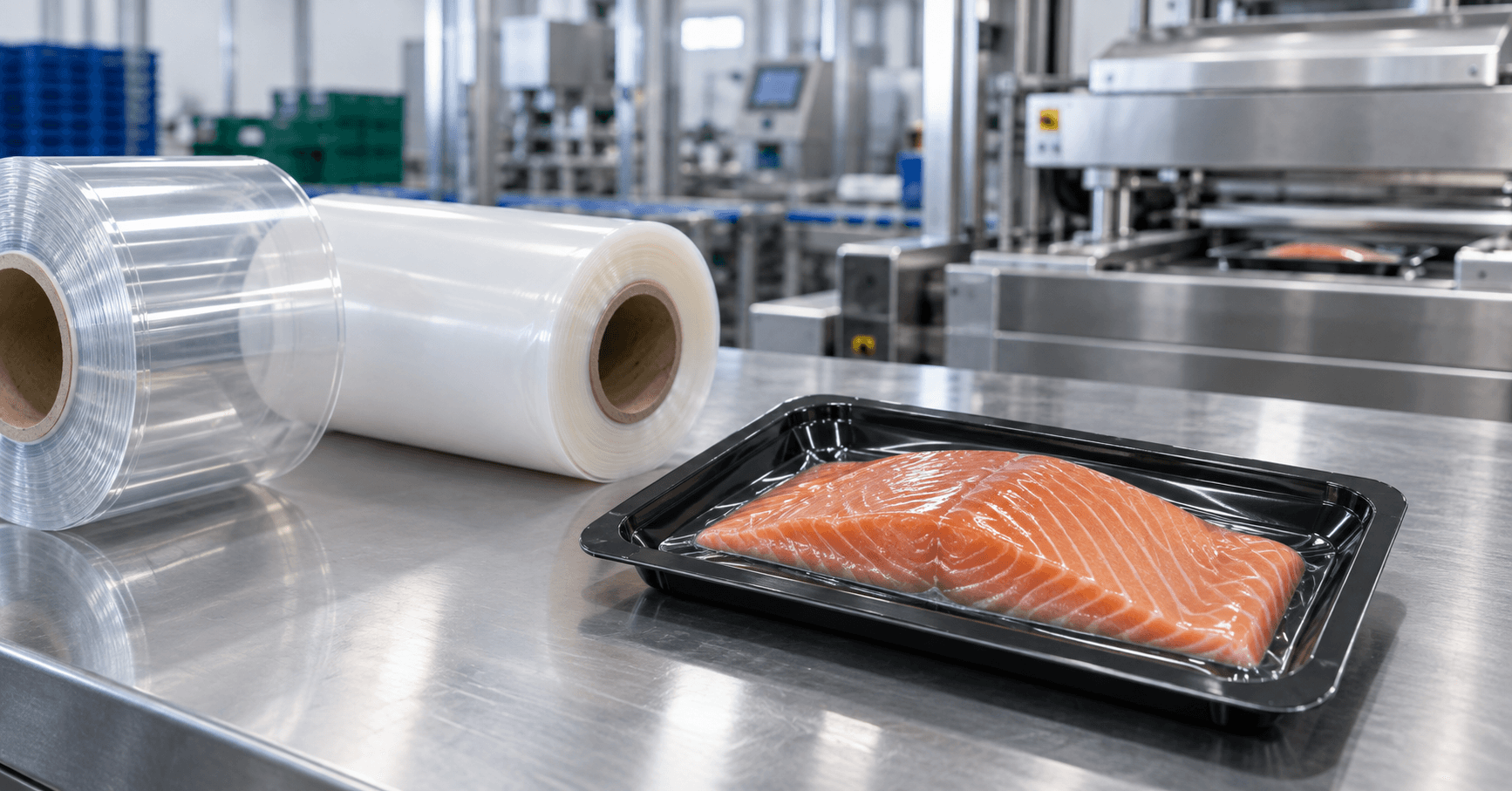
why seal integrity matters in barrier packaging
9. Printing and Appearance
If the project requires printed sheet rolls, the RFQ should mention:
-
whether printing is required
-
number of colors
-
spot color requirement
-
print registration tolerance if relevant
-
whether abrasion resistance is important
-
whether the design is for premium retail display
-
whether gold metallized or special visual effects are needed
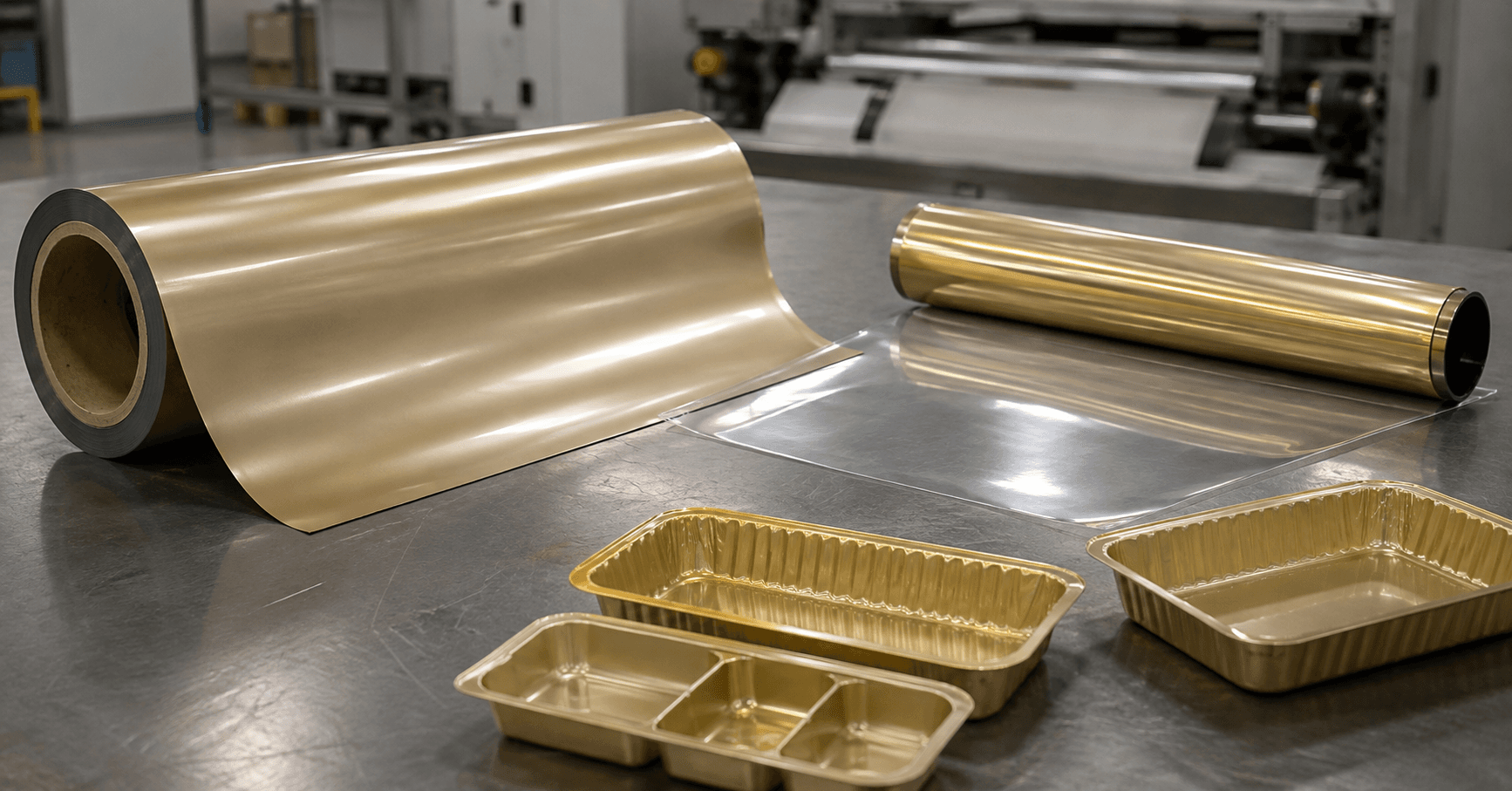
Printed thermoforming rolls for candy trays, chocolate trays, cheese stick packs, and gift packaging often require more than basic printability. They also need good surface protection to reduce scuffing, blocking, and appearance defects during transport and stacking.
printed thermoforming sheet rolls
10. Packing, Logistics, and Compliance Documents
Finally, buyers should not overlook packing and documentation.
These items may include:
-
pallet packing or loose rolls
-
export pallet requirement
-
moisture protection
-
dust-proof packing
-
label content
-
lot traceability
-
COA
-
MSDS
-
food-contact declaration
-
migration or other test reports
In export projects, documentation is often a purchasing requirement, not just a technical add-on.
Practical RFQ Table for Thermoforming Sheet Rolls
Below is a practical checklist buyers can use before sending an inquiry.
| Item | What to Confirm | Example / Notes |
|---|---|---|
| Material | PET / PP / PS / laminated structure | PET/PE, PP/CPP, PET/EVOH/PE |
| End use | Final packed product | Sushi tray, meat tray, chocolate tray, cheese stick pack |
| Food contact | Direct or indirect food contact | Food-grade documents may be required |
| Thickness | Target thickness | 350 microns |
| Thickness tolerance | Acceptable range | ±3% / ±5% |
| Width | Sheet roll width | 520 mm |
| Roll length / weight | Length or roll weight | Based on line handling capacity |
| Core ID | Inner core diameter | 3 inch / 6 inch |
| Max OD | Maximum roll outside diameter | Must match machine capacity |
| Winding direction | Surface / seal layer orientation | Important for printed or laminated rolls |
| Surface requirement | Gloss, matte, corona, anti-fog, anti-static | State by application |
| Sealing requirement | Heat seal / easy-peel / lidding film match | PE or CPP structure |
| Barrier requirement | OTR / WVTR / EVOH | Include test conditions if possible |
| Printing requirement | Colors, print location, abrasion resistance | Important for retail packs |
| Appearance | Transparency, haze, gloss, color | Clear, white, black, metallized |
| Forming method | Vacuum forming / pressure forming | Can affect structure recommendation |
| Temperature condition | Ambient / chilled / frozen | Example: -20°C application |
| Sample request | Trial samples needed or not | State sample size and purpose |
| Packing requirement | Pallet, labels, moisture protection | Based on logistics conditions |
| Documents | COA, MSDS, food-contact declaration, test report | Confirm before quotation |
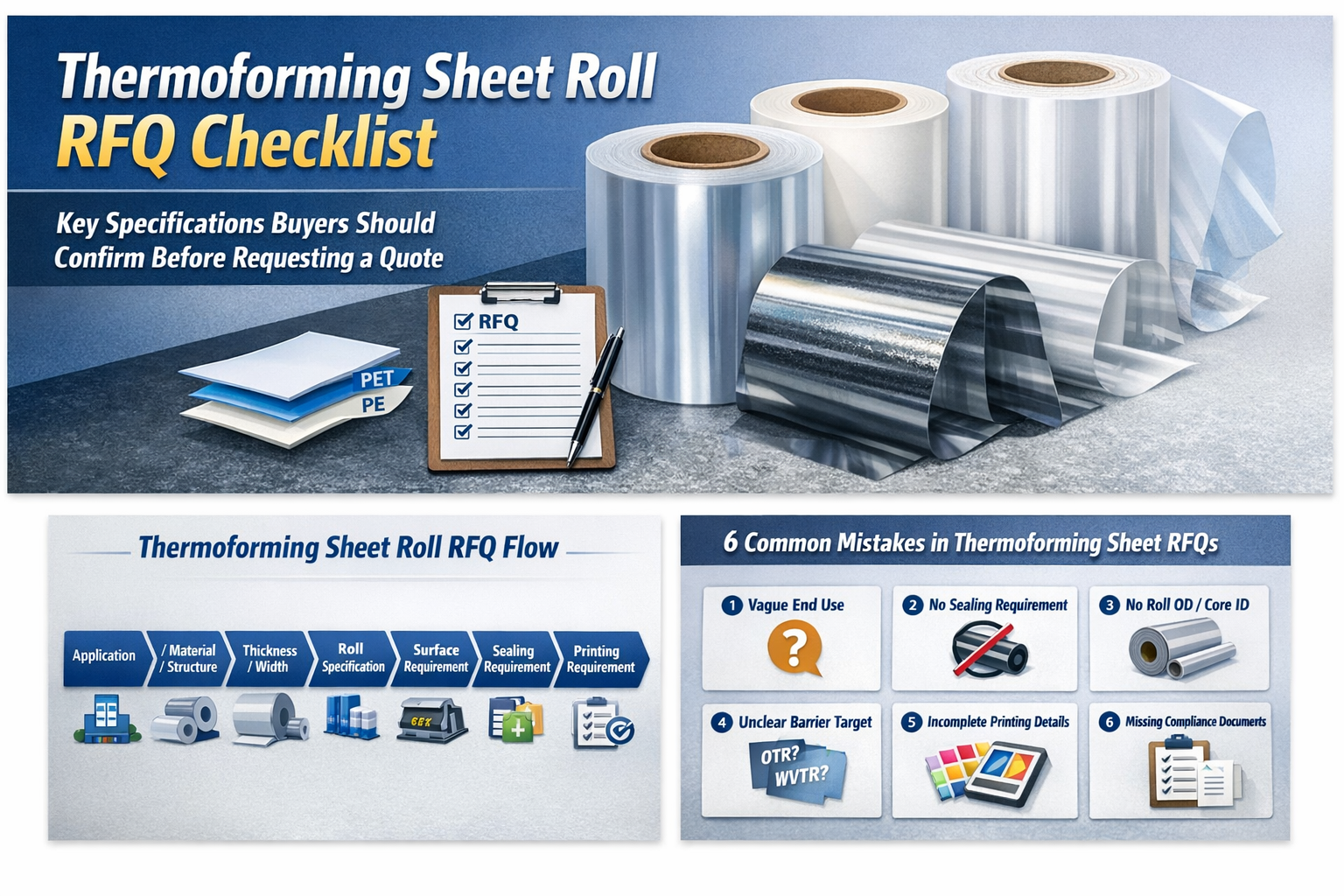
The 6 Most Commonly Missed Details in Buyer RFQs
Even experienced buyers sometimes miss the following points.
1. The final application is too vague
“Food packaging” is not enough. Suppliers need to know whether the application is for sushi, meat, frozen seafood, chocolate, bakery, or industrial blister use.
2. Sealing requirement is not mentioned
A general thermoforming sheet and a sealable laminated tray sheet are not the same product.
3. Machine limitations are not provided
Width, core size, roll OD, and winding direction can all affect whether the roll runs successfully.
4. Barrier target is unclear
Saying high barrier without OTR, WVTR, or shelf-life expectations can lead to the wrong structure recommendation.
5. Printing requirement is too general
For printed rolls, buyers should explain more than need printing. Color count, abrasion resistance, design position, and visual consistency all matter.
6. Cold-chain condition is not stated
Ambient, refrigerated, and frozen applications require different material priorities. This is especially important for seafood, meat, and chilled ready-meal packaging.
What Should Buyers Include in a Thermoforming Sheet RFQ?
For a fast and useful quotation, buyers should ideally include:
-
material
-
structure
-
thickness
-
width
-
roll specification
-
end use
-
sealing requirement
-
barrier target
-
printing requirement
-
compliance document requirement
This single step can significantly improve quotation accuracy and reduce delays in sample development.
FAQ
1. What should be included in a thermoforming sheet roll RFQ?
A thermoforming sheet roll RFQ should ideally include material, structure, thickness, width, roll specification, end use, sealing requirement, barrier target, printing requirement, and compliance document needs.
2. Why is thickness tolerance important in thermoforming sheet sourcing?
Thickness tolerance affects forming consistency, rigidity, sealing stability, and machine performance. A sheet with the correct nominal thickness but poor tolerance may still cause production problems during line trials.
3. What roll specifications should buyers confirm before ordering?
Buyers should confirm width, roll length, roll weight, core ID, maximum roll OD, winding direction, and whether roll joints or splices are acceptable.
4. When should buyers choose laminated thermoforming sheet instead of single-layer sheet?
Laminated sheet is usually preferred when the application also requires heat sealing, easy-peel opening, barrier properties, anti-fog performance, cold-chain durability, or stronger functional performance beyond basic forming.
5. Why should barrier requirements be defined in an RFQ?
Barrier requirements such as OTR, WVTR, and shelf-life target help suppliers recommend the right structure. Without them, a quotation may not reflect the actual packaging performance needed for the final pack.
Conclusion
In thermoforming sheet roll sourcing, price is important, but specification clarity is often even more important.
A well-prepared RFQ checklist helps buyers:
-
receive more accurate quotations
-
get more suitable structure recommendations
-
reduce delays in sampling
-
improve line compatibility
-
lower the risk of trial failure during project development
For suppliers, a complete RFQ also makes it easier to recommend the right PET, PP, PS, or laminated structure for the actual packaging application.
If you are sourcing thermoforming sheet rolls for food trays, printed trays, high-barrier packs, easy-peel applications, gold metallized trays, or laminated retail packaging, preparing a complete RFQ before contacting suppliers can save significant time and cost.
CTA
Need help preparing your thermoforming sheet RFQ?
WANSYN Industry supplies PET / PP / PS thermoforming sheet rolls and functional laminated structures for food packaging, printed tray applications, high-barrier packs, easy-peel formats, and specialty display packaging.
If you share your application, line condition, and target performance, we can help review your RFQ, recommend a suitable structure, and support sample development.