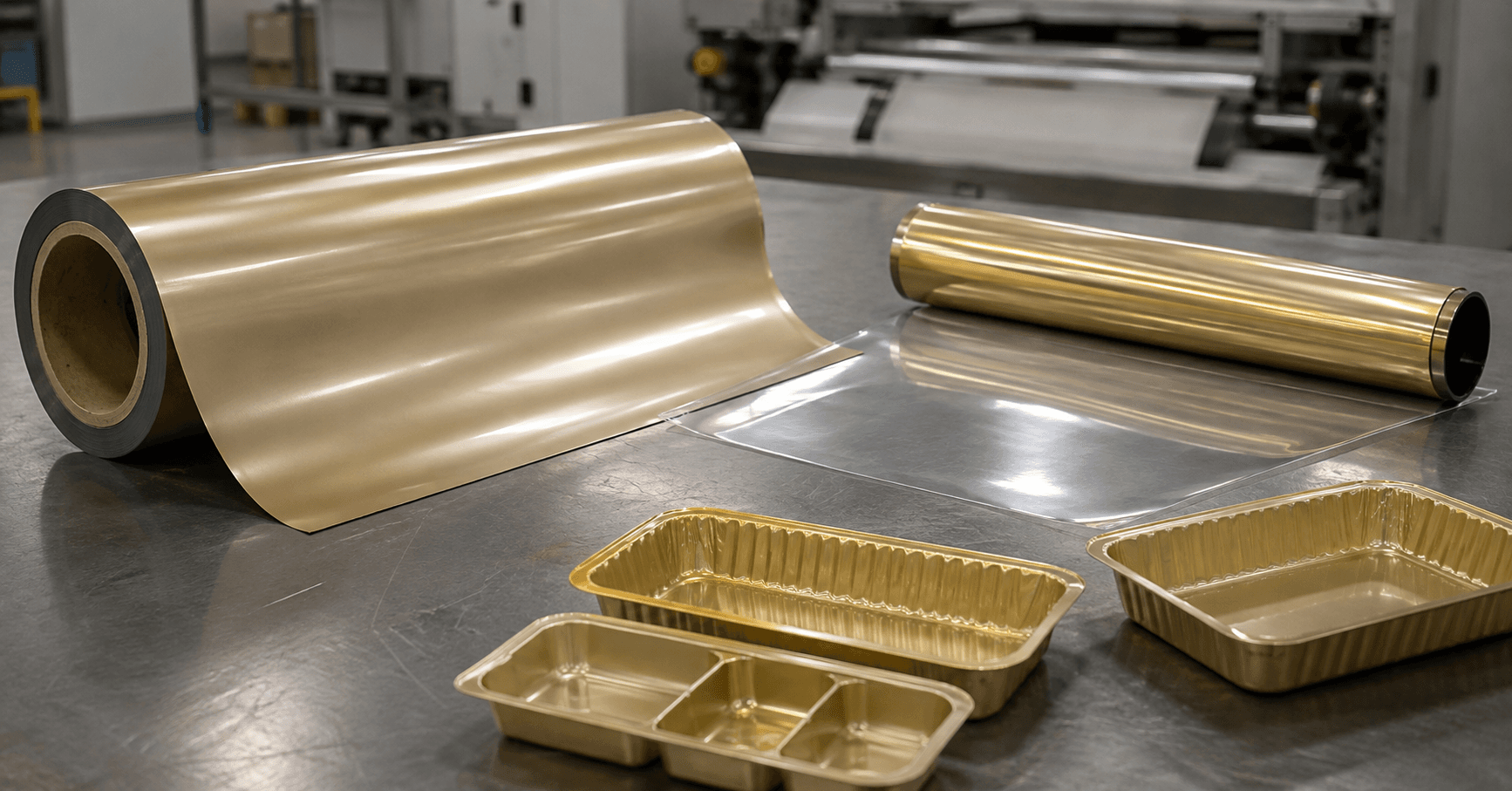

Printed Thermoforming Sheet Rolls
A Production-Ready Solution for Candy/Chocolate Trays & Cheese Stick Trays
Many buyers think they are sourcing “printed sheet rolls”.
In real production, what they need is printing + thermoforming working as one system:
-
Graphics stay sharp after heating & stretching
-
Surface resists scuffing during nesting and carton packing
-
Color/gloss remain consistent from batch to batch
-
Roll format runs smoothly on your forming line
That’s why the correct positioning is:
Printed Thermoforming Sheet Rolls
A project-based solution designed for thermoformed trays with printing performance that survives forming and logistics.
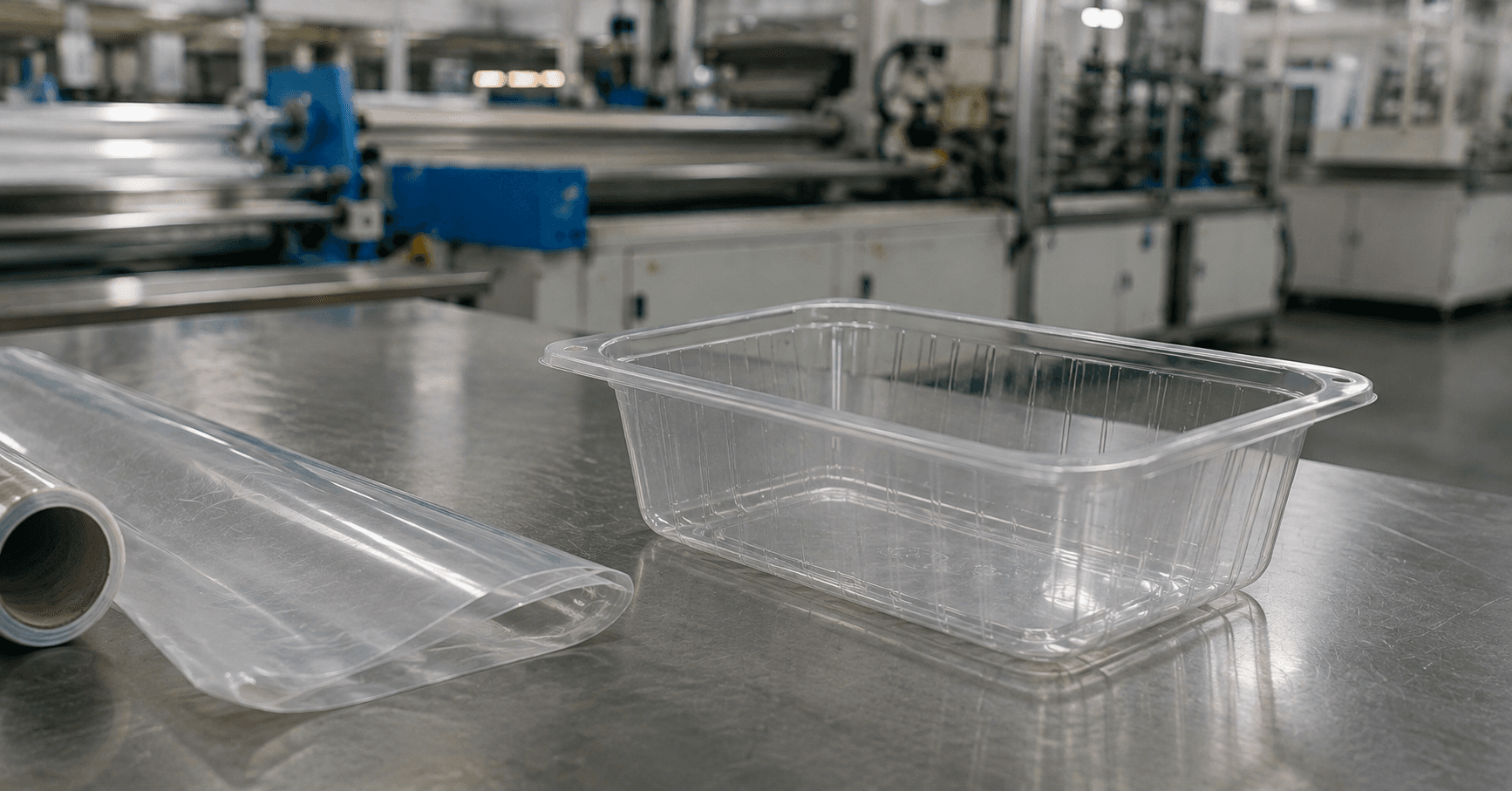
We can print on PET / PP / PS — recommended per project, not by a fixed one-material claim.
1) Why “thermoforming + printing” must be discussed together
Printed tray projects rarely fail on the printing press.
They fail later—on the thermoforming line and in logistics.
Good on the roll ≠ good after forming ≠ good after shipping
A printed thermoforming project is tested three times:
-
Heating & draw: will the artwork distort, fade, or lose gloss?
-
Nesting & packing: will trays scuff, scratch, or look “used” on shelf?
-
Repeatability: can the supplier reproduce the same color/gloss across batches?
So the deliverable is not “ink on plastic”, but:
✅ Post-forming appearance stability
✅ Scuff resistance in nesting/packing
✅ Batch consistency for mass production
2) What a production-ready Printed Thermoforming Sheet Roll includes
A stable project typically includes:
-
Base layer (PET/PP/PS, project-based): stiffness/toughness/forming stability
-
Surface prep / primer (optional): improves ink adhesion and durability
-
Printing + curing system: color reproduction, heat tolerance, rub performance
-
Protection options (optional): coating / functional layer for higher scuff resistance (project-based)
In short:
We deliver a “formed-tray-ready” printing system — not just a good-looking roll.
3) Two buyer profiles (and how we solve their key risks)
A) Candy & Chocolate tray buyers (brand-display focused)
Their success metrics:
-
premium look (clean graphics, stable gloss)
-
shelf-ready appearance (not scuffed, not dull)
-
consistent branding across batches
Typical risks:
-
artwork distortion after forming (deep cavities, sharp corners)
-
whitening / gloss shift in corners
-
scuff marks from tight nesting and carton pressure
How to win the project:
-
define post-forming artwork target based on tray depth & draw ratio
-
define scuff target based on nesting and packing method
-
use protection options when the project requires “high scuff resistance”
B) Cheese stick / stick-style dairy tray buyers (efficiency + scuff-risk focused)
Their success metrics:
-
stable forming speed and repeatable roll quality
-
minimal scuffing in high-volume packing
-
predictable supply and batch consistency
Typical risks:
-
tight nesting causes visible rub marks
-
carton pressure creates scratches or surface haze
-
batch-to-batch variation shifts brand color
How to win the project:
-
confirm print-side orientation and contact surfaces
-
put scuff requirement into the RFQ (so it’s measurable)
-
run a short packing simulation before full scale
4) The 4 questions that speed up quoting and sampling
To match “thermoforming + printing” correctly, confirm:
-
Tray geometry: depth, sharp corners, draw ratio
-
Print side position: inside/outside; does it touch nesting surfaces?
-
Nesting & packing: tight nesting? carton pressure? shipping distance?
-
Appearance standard: Pantone/sample, gloss vs matte, premium effects
With these 4 points, the solution becomes much faster and more accurate.
5) Copy-ready RFQ checklist (for printed thermoforming projects)
Please share:
-
Application: candy tray / chocolate tray / cheese stick tray / snack insert
-
Artwork: AI/PDF file or reference sample; color standard (Pantone/sample)
-
Thermoforming process: vacuum / pressure / plug assist; heating method; line speed
-
Tray geometry: forming depth ___ mm; sharp corners? nesting tight?
-
Printed side: inside/outside; contact with nesting surface? yes/no
-
Roll spec: thickness ___ mm (range); width ___ mm; roll OD ___; core ID ___; roll weight ___
-
Scuff target: packing method + transit condition + “high scuff resistance” needed?
-
Compliance: food-contact requirement + destination market
-
Volume: trial qty + annual volume + destination port
6) FAQ
Q1: Do you only print on PET?
No. We can print on PET/PP/PS. The base layer is recommended per tray design, forming conditions, and scuff risk.
Q2: How do you ensure graphics look good after forming?
We match the solution to your draw ratio and heating window, and validate through trial forming (especially corners and deep cavities).
Q3: We worry most about scuffing in nesting and carton packing—what helps?
Confirm print-side contact surfaces, define a scuff target early, and use protection options when needed (project-based). Packing simulation before mass production is strongly recommended.
CTA
If you’re developing printed thermoformed trays for candy, chocolate, or cheese sticks and need post-forming stability + scuff resistance + batch consistency, send your tray photo/drawing + roll spec + scuff target. We’ll recommend a project-based PET/PP/PS solution and provide sampling for validation.
Related Products
PET Sheet Roll for Thermoforming
PP/PS Sheet Roll for Thermoforming
Related Links