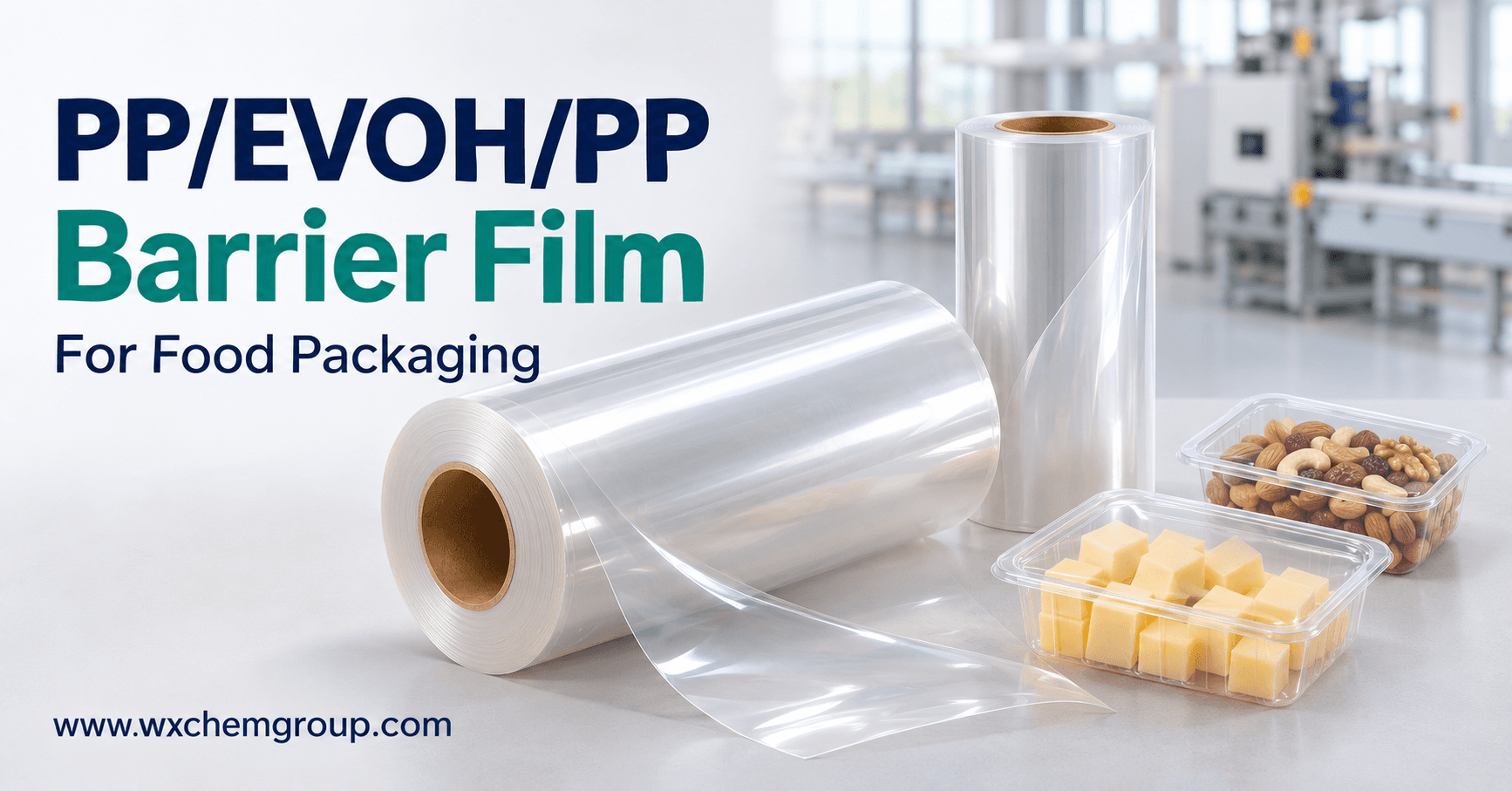

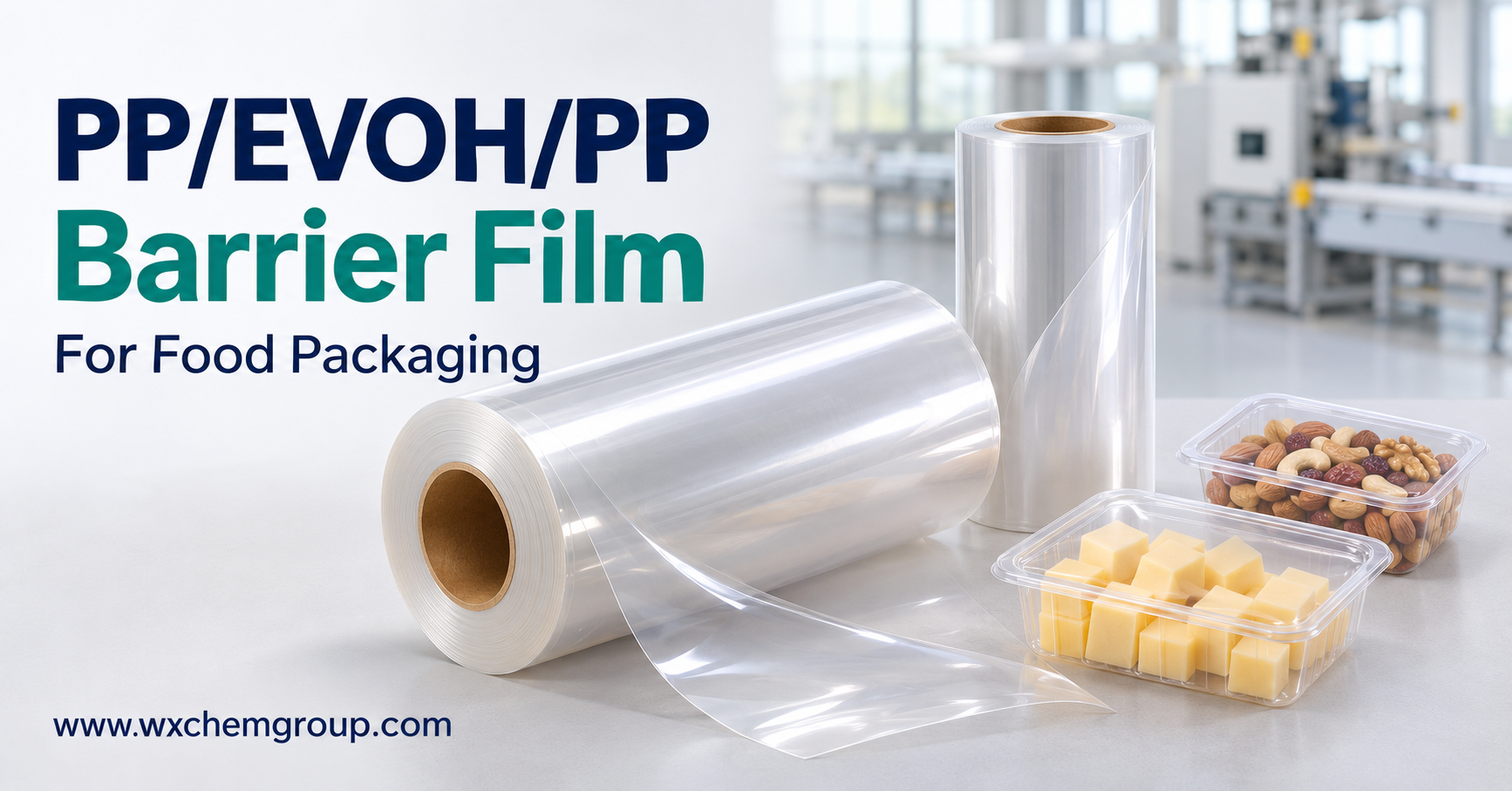
PP/EVOH/PP barrier film combines a polypropylene-based surface with an EVOH oxygen-barrier function. It is used in selected food-packaging, lamination and tray-lidding projects where buyers need both product protection and suitable sealing or converting performance.
For packaging converters and food businesses, the main purchasing questions are practical: Which food will be packed? What thickness and width are required? How will the film be laminated, formed or sealed? What performance must the finished pack achieve?
What is PP/EVOH/PP barrier film?
PP/EVOH/PP is a simplified description of a multilayer polypropylene barrier film. The PP-based surfaces contribute mechanical properties, moisture resistance and the surface functions of the selected grade. The EVOH barrier layer helps limit oxygen transmission.
The detailed construction depends on the grade and application. A coextruded barrier film may be supplied as a functional component for lamination or selected for another defined packaging role.
What benefits does it offer food-packaging projects?
- Oxygen protection: the EVOH layer helps reduce oxygen entry for foods sensitive to oxidation.
- PP-based surface options: suitable grades can be selected for defined PP sealing or converting requirements.
- Moisture resistance: the PP-based layers contribute to moisture protection; the required water-vapour barrier should be specified separately.
- Different packaging formats: grade selection can address lamination, lidding and selected forming applications.
The commercial aim is a package that protects the product and runs consistently on the customer's equipment. Barrier performance should be matched to the food, storage conditions and desired shelf life, with the final pack tested before a shelf-life claim is made.
Typical food-packaging applications
The following applications provide useful starting points for PP-based food packaging development. Choose the film around the complete pack and its actual conditions of use.
| Application | Purpose of the barrier film | What the buyer should specify |
|---|---|---|
| Cheese and processed dairy products | Oxygen control together with the required sealing surface | Product type, storage conditions and package format |
| Nuts, snacks and oxygen-sensitive dry foods | Protection against oxidation, with moisture requirements assessed separately | OTR, WVTR, desired shelf life and any light-protection requirement |
| Meat, seafood and prepared foods | A barrier component for a defined vacuum or modified-atmosphere pack | Atmosphere, chilled or frozen conditions and complete packaging structure |
| Lids for PP trays or cups | A PP-based sealing face within an oxygen-barrier lid design | Actual sealing surface, permanent or peelable seal and opening requirements |
| Laminated packaging films and sheets | A functional film added to the selected base material | Base substrate, lamination process and downstream use |
For MAP packaging film, the top film, bottom material and seal work as one system. Film selection should follow the food's atmosphere requirements, rather than assuming that the lowest possible oxygen transmission is always the right target.
Choose the film for your production process
PP/EVOH/PP film for lamination
For lamination, provide the base material, film thickness, width and process. An adhesive-lamination project needs a grade matched to that route and the required surface treatment.
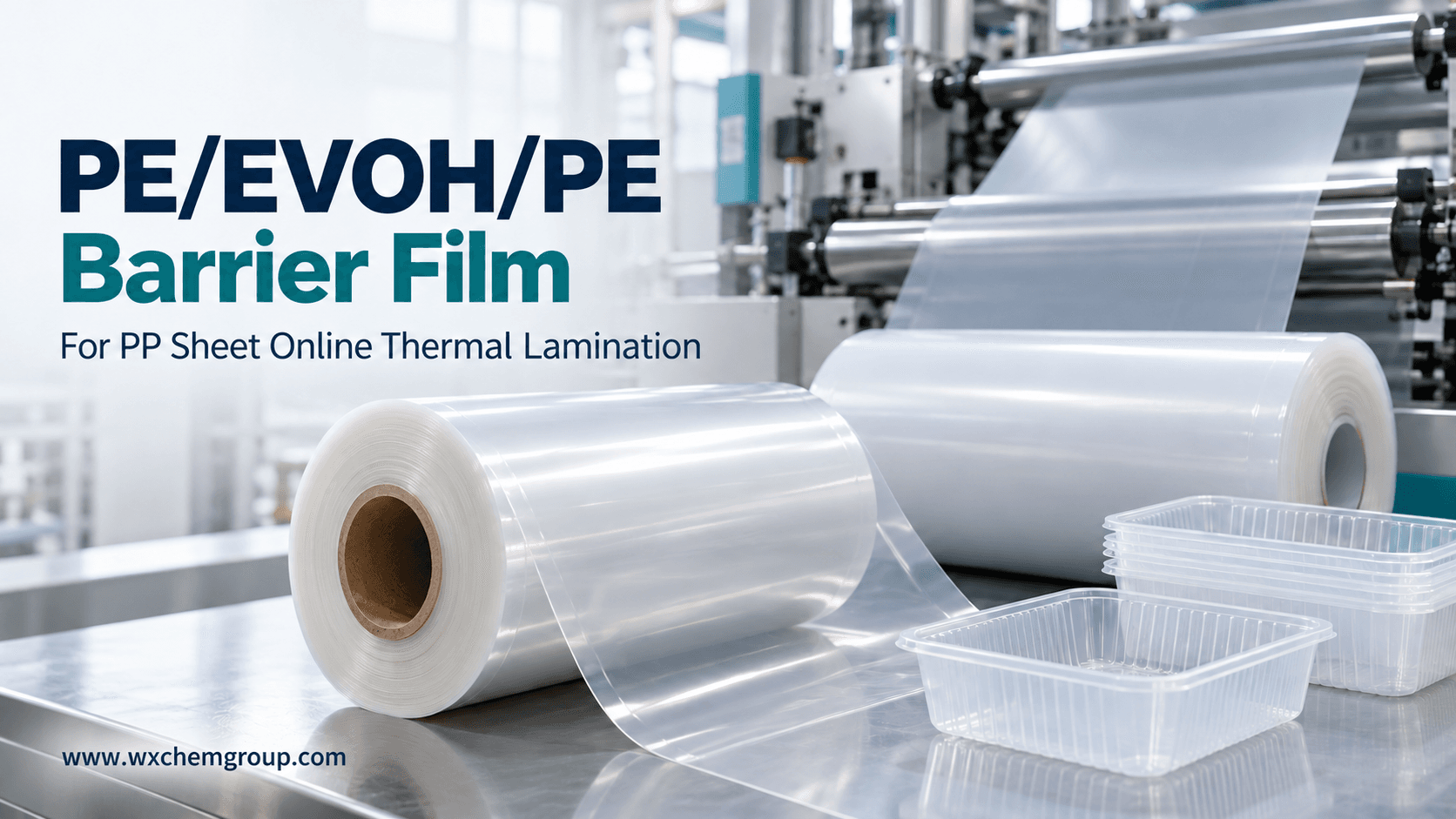
If you need online thermal lamination, state this clearly in the enquiry and provide the line details. That process requires a specifically matched grade. For the related PE-based option, see our PE/EVOH/PE film guide for PP online thermal lamination.
PP lidding film
For tray or cup sealing, send a sample or specification of the actual sealing surface. The structural material of a tray and the material exposed at its flange can differ.
Specify whether the pack needs a permanent seal or an easy-peel opening. If anti-fog performance is required, include it in the project brief so the appropriate option can be reviewed.
PP thermoforming film or sheet
Confirm whether you are buying a thin film for lamination or a finished material ready for thermoforming. Provide the tray drawing, depth and intended process. After forming, inspect critical corners and sidewalls and verify the required barrier performance.
Our thermoforming and barrier-layer-thinning guide explains why flat-material data alone does not establish the performance of a formed tray.
PP/EVOH/PP vs PE/EVOH/PE: which should you choose?
Both families use EVOH for oxygen protection. Their PP-based or PE-based surfaces lead to different sealing and converting choices.
Start with the surface the film must seal or laminate to, then consider the process and finished-package requirements. Compare candidate grades using the same barrier conditions, sealing pair and production trial. Neither film family is a universal replacement for the other.
Key specifications to confirm before ordering
| Specification | Information to provide |
|---|---|
| Thickness and width | Required dimensions in microns and millimetres, plus tolerances |
| Oxygen barrier | Target oxygen transmission rate (OTR), units, method, temperature and humidity |
| Moisture barrier | Water-vapour transmission rate (WVTR), where relevant to the product |
| Sealing | Actual counterpart, permanent or easy-peel opening and required heat seal strength |
| Processing | Lamination, lidding or forming; equipment details and intended operating conditions |
| Roll format | Core ID, maximum outside diameter, length or weight, and unwind orientation |
| Quantity and delivery | Trial quantity, regular order quantity and destination |
OTR figures are useful only when their test conditions are clear. EVOH is humidity-sensitive, so a result measured under dry conditions should not be transferred unchanged to a humid application. ASTM D3985 is one method used for oxygen-transmission testing of plastic film and sheeting.
For an EVOH percentage, confirm its basis in the supplied film or finished material. Percentage alone is not a substitute for the required barrier result.
For sealing, check both seal strength and leakage on the intended pack. A strong seal test result alone does not demonstrate complete package integrity.
How to compare film quotations and control packaging cost
A practical quotation comparison goes beyond the price per kilogram. Compare the same thickness, barrier target, sealing function, roll format and delivery terms.
Also consider usable film area, production speed, startup waste and rejected packs. A lower kilogram price may offer little benefit if the film cannot run reliably or meet the packaging requirement.
For projects serving Central and South Asian markets, include the delivery destination and expected storage and distribution conditions in the brief. Where transport or storage involves high temperatures or humidity, state those conditions so the proposed film can be evaluated accordingly.
A useful first step is to agree a trial quantity separately from the regular production order. Evaluate the material on the actual equipment before approving a larger purchase.
Sample trials and end-use approval
During a trial, check film feeding, surface appearance, bonding where applicable, sealing performance and the finished package. Retain the sample identity and settings so an approved result can be repeated.
For hot filling, pasteurisation, retort, microwave use or frozen storage, specify the actual conditions at the start. These applications require a suitable grade and finished-pack validation; the PP/EVOH/PP name alone does not establish approval.
Request food-contact documentation appropriate to the selected grade, packed product, contact conditions and destination market. If a customer requires a recyclability claim, review the complete pack against the relevant local system.
Request a PP/EVOH/PP barrier-film quotation from WANSYN
Looking for a barrier film supplier for a lamination or food-packaging project? Send WANSYN the following details:
- Application and packed product
- Required film thickness and width
- Base material or tray sealing surface
- Lamination, sealing or forming process
- Barrier target or a current material sample
- Trial quantity, expected order volume and delivery destination
If you do not yet have an OTR target, share your existing material specification, package design and intended storage conditions. These provide a starting point for technical discussion and sample selection.
Email info@wxchemgroup.com or contact WANSYN to discuss film options, quotation requirements and sample trials.
Frequently asked questions
What is PP/EVOH/PP barrier film mainly used for?
Selected grades are used in lamination, lidding and forming projects where a PP-based surface and oxygen protection are required.
Can it seal to PP trays?
A suitable sealing grade can be selected for a defined PP surface. Confirm the actual tray surface, sealing conditions and opening requirement.
Which thickness should I choose?
Choose around the packaging format, barrier target, handling and equipment. Send your current film specification or application details for review.
Can all PP/EVOH/PP films be used for online thermal lamination?
No. The film grade must be specifically matched to the substrate and thermal-lamination line.
Does the film guarantee a fixed shelf life?
No fixed duration follows from the structure alone. Validate the food, complete pack and storage conditions together.
What do you need for a quotation and sample trial?
Provide the application, thickness, width, process, sealing or barrier requirements, quantity and destination.
Technical reference
Buntinx et al., Polymers (2014) includes experimental work on PP/EVOH/PP thermoforming and supports checking thickness distribution and oxygen transmission after forming.